

肿瘤坏死因子 (TNFs)及其受体
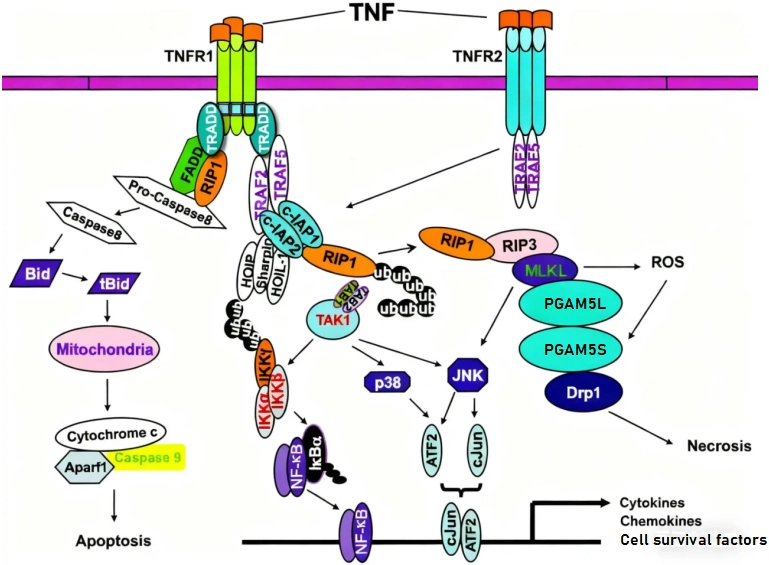
肿瘤坏死因子超家族(TNFSF)是一组在生物学中发挥广泛而重要作用的蛋白质。目前,该家族已鉴定出19个配体,如TNF-α、TNF-β、CD40L、FasL、TRAIL、RANKL等,对应的受体有29个。TNFSF成员均为II型跨膜蛋白,其C末端含有TNF同源结构域,可促进配体与受体三聚体复合物的形成,从而激活细胞内信号通路。这些配体通过与不同受体结合,调控多种细胞功能,包括免疫应答、炎症反应、细胞增殖、分化、凋亡和胚胎发育等,在维持机体稳态和应对外界刺激方面发挥关键作用。例如,TNF-α在多种肿瘤中异常表达,可促进肿瘤生长、血管生成、侵袭和转移,同时抑制凋亡;而TRAIL可选择性诱导肿瘤细胞凋亡,成为肿瘤治疗的新靶点。此外,CD40L的过表达与多种自身免疫疾病相关,如红斑狼疮和类风湿关节炎;RANKL/RANK信号异常则与骨质疏松相关。
产品列表
| 靶点 | 产品货号 | 产品名称 | 反应性 | 预测分子量 |
|---|---|---|---|---|
| TNF alpha | PEV1680 | Recombinant Rabbit TNF alpha | Rabbit | 17.59 KDa |
| TNF alpha | PER1678 | Recombinant Rat TNF alpha | Rat | 17.4 KDa |
| TNF alpha | PEM1681 | Recombinant Mouse TNF alpha | Mouse | 16.4 KDa |
| TNF beta | PEH1901 | Recombinant Human TNF beta | Human | 18.8 KDa |
| TNF alpha | PEH1679 | Recombinant Human TNF alpha | Human | 17.5 KDa |
| TNF alpha (N-6His) | PEH1677 | Recombinant Human TNF alpha (N-6His) | Human | 21.8 KDa |
| TNF alpha (C-6His) | PEH1676 | Recombinant Human TNF alpha (C-6His) | Human | 18.5 KDa |
| RANK L V2 | PHM2458 | Recombinant Mouse RANK L V2 | Mouse | 23 KDa |
| OPG (C-10His) | PHM1747 | Recombinant Mouse OPG (C-10His) | Mouse | 45.1 KDa |
| OPG (C-Fc) | PHH1674 | Recombinant Human OPG (C-Fc) | Human | 47.2 KDa |
| RELT (C-Fc) | PHH1423 | Recombinant Human RELT (C-Fc) | Human | 41.4 KDa |
| OPG (C-6His) | PHH1255 | Recombinant Human OPG (C-6His) | Human | 44.65 KDa |
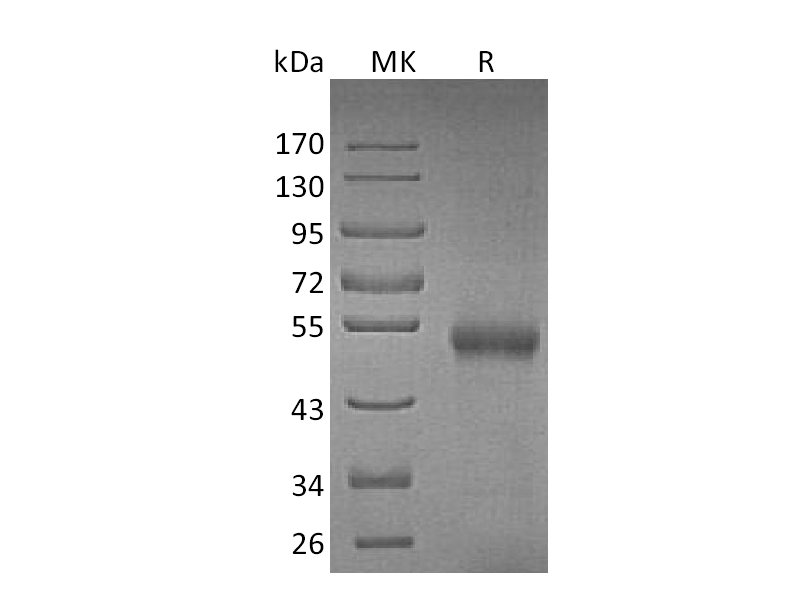
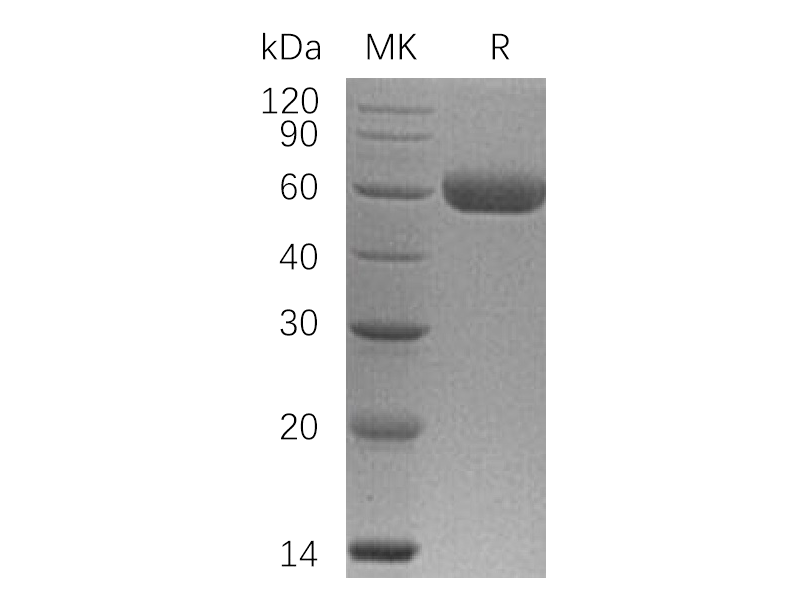
验证数据
相关产品
参考文献
1. Tumor necrosis factor receptor superfamily members and their ligands. Armitage RJ. Curr Opin Immunol. 1994. [PMID: 7917108]
2. Immunobiology of tumor necrosis factor receptor superfamily. Zhou T,et al. Immunol Res. 2002. [PMID: 12403370]
3. Tumor necrosis factor receptor superfamily. Naismith JH, et al. J Inflamm. 1995. [PMID: 8913924]
4. The benefits of clustering in TNF receptor superfamily signaling. Vanamee ÉS, et al. Front Immunol. 2023. [PMID: 37662920]
5. Signalling pathways of the TNF superfamily: a double-edged sword. Aggarwal BB. Nat Rev Immunol. 2003. [PMID: 12949498]
6. The TNF-TNF receptor system. Hehlgans T, et al. Biol Chem. 2002. PMID: [12452434]
7. TNF alpha acting on TNFR1 promotes breast cancer growth via p42/P44 MAPK, JNK, Akt and NF-kappa B-dependent pathways. Rivas MA, et al. Exp Cell Res. 2008. [PMID: 18061162]
8. The role of tumor necrosis factor receptor superfamily in cancer: insights into oncogenesis, progression, and therapeutic strategies. Xu, J. npj Precis. 2025. [PMID: 40770489]