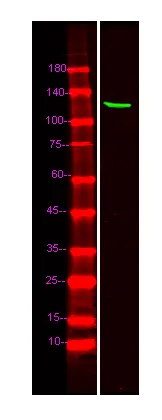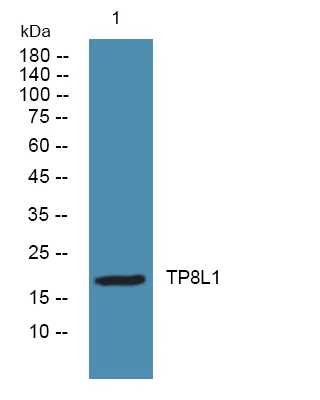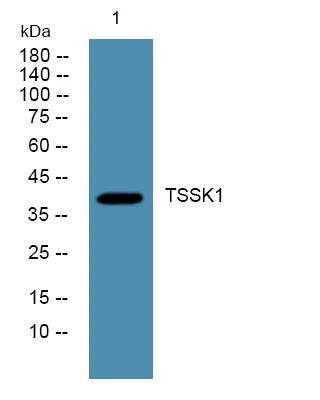


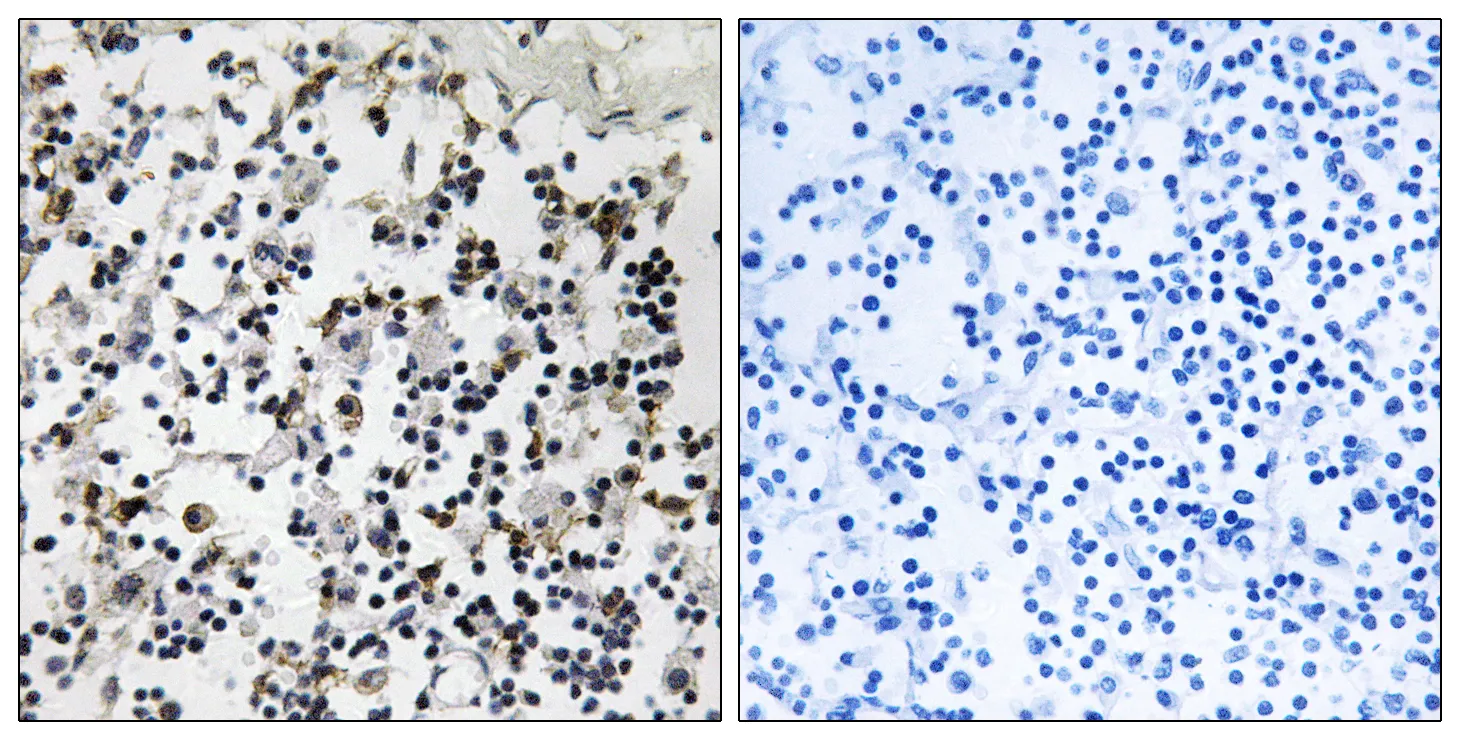
CLIC4 Rabbit Polyclonal Antibody【50ul/100ul买二送一】

CLIC4 Rabbit Polyclonal Antibody【50ul/100ul买二送一】

Cat: APRab09040
★ ★ ★ ★ ★
规格:20μL 价格:¥600
规格:50μL 价格:¥1200
规格:100μL 价格:¥2150
应用(Application):WB,IHC-P,IF-P,IF-F,ICC/IF,ELISA

种属(Reactivity):Human,Mouse,Rat
偶联物(Conjugate):Unconjugated
基因名(Gene Name):CLIC4

分类: 兔多克隆抗体 标签: , , , , , , , , , , ,

说明书 复制

产品概述

产品名称(Product Name)

CLIC4 Rabbit Polyclonal Antibody

描述(Description)

Rabbit polyclonal Antibody

宿主(Host)

Rabbit

应用(Application)

WB,IHC,ICC/IF,ELISA

种属反应性(Reactivity)

Human,Mouse,Rat


产品性能

偶联物(Conjugation)

Unconjugated

修饰(Modification)

Unmodified

同种型(Isotype)

IgG

克隆(Clonality)

Polyclonal

形式(Form)

Liquid

存放说明(Storage)

Store at 4°C short term. Aliquot and store at -20°C long term. Avoid freeze/thaw cycles.

储存溶液(Buffer)

Liquid in PBS containing 50% glycerol, 0.5% protective protein and 0.02% New type preservative N.

纯化方式(Purification)

Affinity purification


免疫原

基因名(Gene Name)

CLIC4

别名(Alternative Names)

CLIC4; Chloride intracellular channel protein 4; Intracellular chloride ion channel protein p64H1

基因ID(Gene ID)

25932

蛋白ID(SwissProt ID)

Q9Y696


产品应用

稀释比(Dilution Ratio)

WB 1:500-1:2000,IHC 1:100-1:300,ICC/IF 1:50-1:200,ELISA 1:20000-1:40000

蛋白分子量(Molecular Weight)

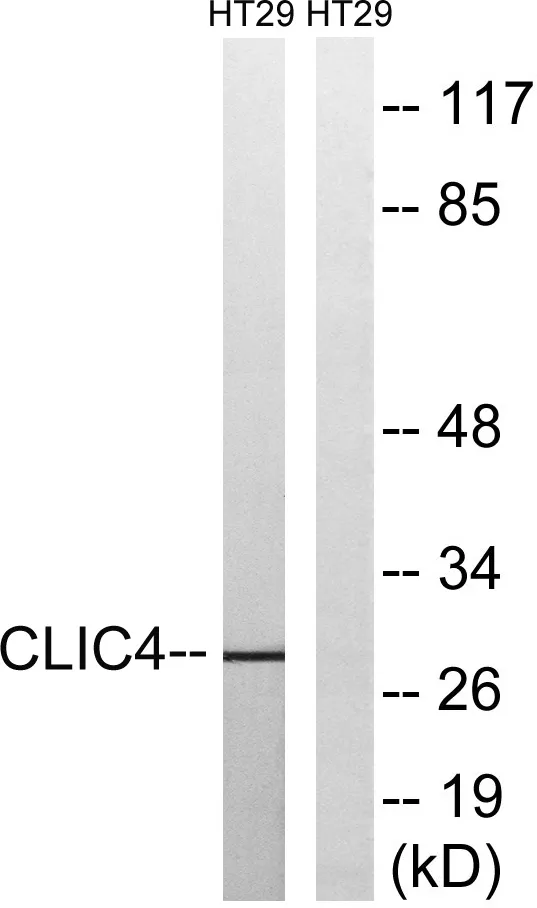
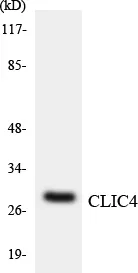
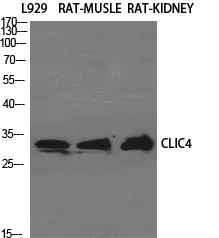
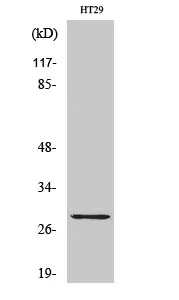
29kDa


研究背景

chloride intracellular channel 4(CLIC4) Homo sapiens Chloride channels are a diverse group of proteins that regulate fundamental cellular processes including stabilization of cell membrane potential, transepithelial transport, maintenance of intracellular pH, and regulation of cell volume. Chloride intracellular channel 4 (CLIC4) protein, encoded by the CLIC4 gene, is a member of the p64 family; the gene is expressed in many tissues and exhibits a intracellular vesicular pattern in Panc-1 cells (pancreatic cancer cells). [provided by RefSeq, Jul 2008],domain:Members of this family may change from a globular, soluble state to a state where the N-terminal domain is inserted into the membrane and functions as chloride channel. A conformation change of the N-terminal domain is thought to expose hydrophobic surfaces that trigger membrane insertion.,function:Can insert into membranes and form poorly selective ion channels that may also transport chloride ions. Channel activity depends on the pH. Membrane insertion seems to be redox-regulated and may occur only under oxydizing conditions. Promotes cell-surface expression of HRH3. May play a role in angiogenesis.,induction:Up-regulated by calcium ions in differentiating keratinocytes.,similarity:Belongs to the chloride channel CLIC family.,similarity:Contains 1 GST C-terminal domain.,subcellular location:Exists both as soluble cytoplasmic protein and as membrane protein with probably a single transmembrane domain. Present in an intracellular vesicular compartment that likely represent trans-Golgi network vesicles.,subunit:Monomer. Interacts with HRH3.,tissue specificity:Detected in epithelial cells from colon, esophagus and kidney (at protein level). Expression is prominent in heart, placenta and skeletal muscle.,


研究领域

Cell Biology

  • 027-87002838

  • order@enkilife.cn

  • 微信客服
  • 企业微信
  • 在线留言
    关闭
    function uet_report_conversion() { window.uetq = window.uetq || []; window.uetq.push('event', 'wechat_qr_click', { "event_label": "wechat_qr", "event_category": "lead" }); } (function() { var fired = false; function fireWechatConversion() { if (fired) return; fired = true; uet_report_conversion(); } document.addEventListener('click', function(e) { if ( e.target.closest('.rightNav li.howshow') && e.target.closest('.rightNav li.howshow').querySelector('.fa-wechat, .fa-qrcode') ) { fireWechatConversion(); } }); document.addEventListener('mouseover', function(e) { var item = e.target.closest('.rightNav li.howshow'); if (!item) return; if (!item.querySelector('.fa-wechat, .fa-qrcode')) return; var from = e.relatedTarget; if (from && item.contains(from)) return; fireWechatConversion(); }); })();