Recombinant Human EFNB1 (C-6His)
Alternative NamesEphrin-B1;EFL-3; ELK ligand; EPH-related receptor tyrosine kinase ligand 2;LERK-2
规格参数 Specifications
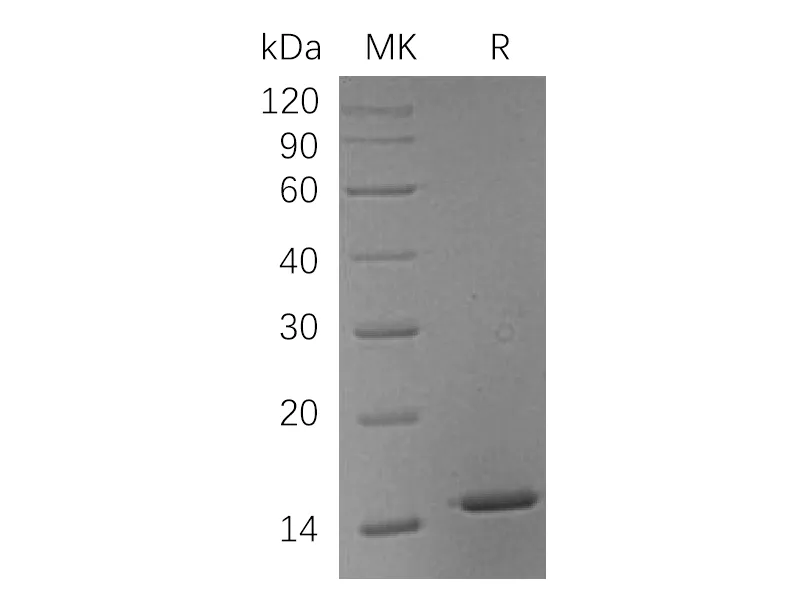
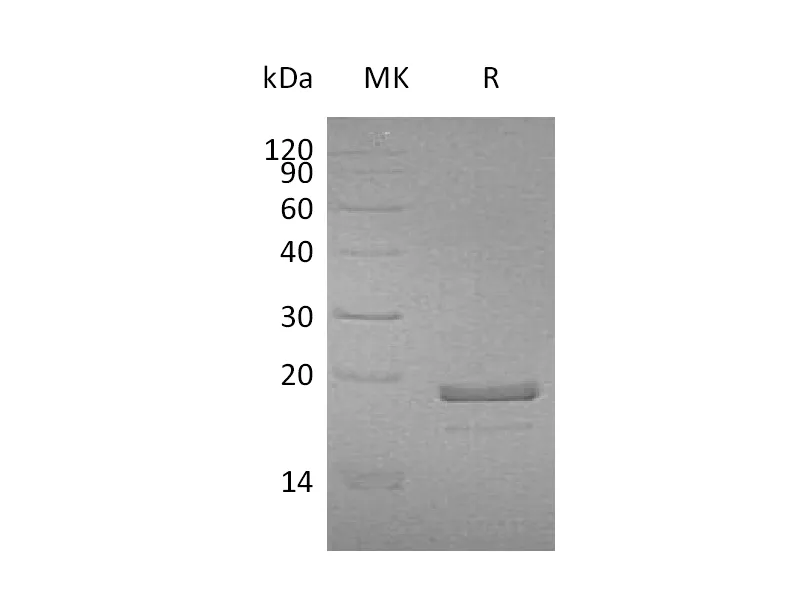
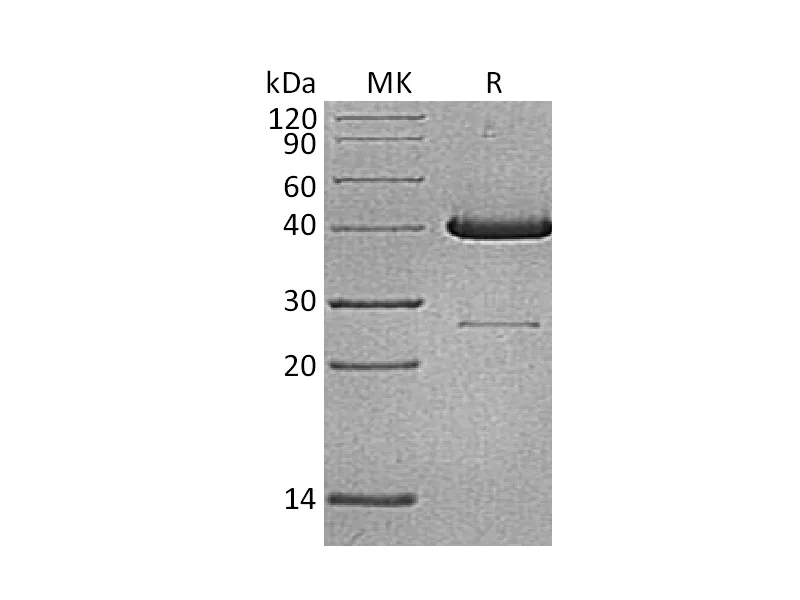
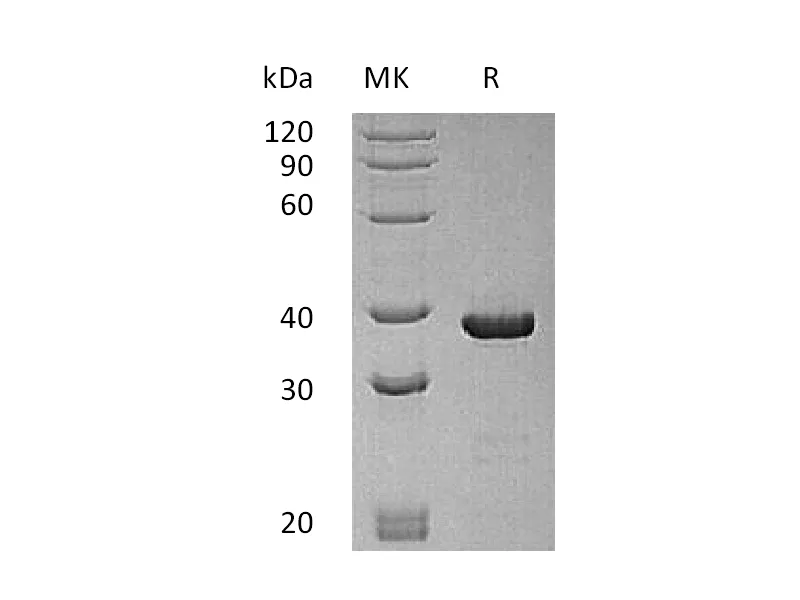
| 纯度Purity | Greater than 95% as determined by reducing SDS-PAGE |
|---|---|
| 内毒素Endotoxin | <1 EU/µg as determined by LAL test. |
| 蛋白构建Protein Construction |
【Leu28-Gly232】序列区间-6HisC 端标签
|
| Accession | P98172 |
| 表达宿主Expression Host | HEK293 |
| 种属Species | Human |
| 预测分子量Predicted MW | 23.4 kDa |
| 制剂Formulation | Lyophilized from a 0.2 μm filtered solution of 20mM PB, 150mM NaCl, pH 7.4. |
| 运输方式Shipping | The product is shipped with ice bag. Upon receipt, store it immediately at the temperature listed below. |
| 稳定性&储存Stability & Storage | 12 months at -20°C to -80°C in lyophilized state.6 months at -20°C to -80°C under sterile conditions after reconstitution.7-10 days at 2°C to 8°C under sterile conditions after reconstitution.Please minimize freeze-thaw cycles. |
| 复溶Reconstitution | Always centrifuge tubes before opening. Do not mix by vortex or pipetting. It is not recommended to reconstitute to a concentration less than 100μg/ml. Dissolve the lyophilized protein in distilled water. Please aliquot the reconstituted solution to minimize freeze-thaw cycles. |
!
本司产品仅用于科研,不用于临床诊断和治疗。
产品图片 Product Images点击图片可查看原图
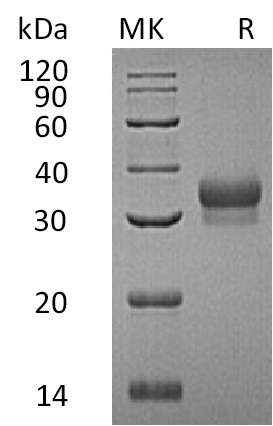 |
Greater than 95% as determined by reducing SDS-PAGE. |
靶点信息 Target Information
| 分子别名Alternative Names | Ephrin-B1EFL-3ELK ligandEPH-related receptor tyrosine kinase ligand 2LERK-2 |
|---|---|
| 功能Function | Cell surface transmembrane ligand for Eph receptors, a family of receptor tyrosine kinases which are crucial for migration, repulsion and adhesion during neuronal, vascular and epithelial development. Binding to Eph receptors residing on adjacent cells leads to contact-dependent bidirectional signaling into neighboring cells. Shows high affinity for the receptor tyrosine kinase EPHB1/ELK. Can also bind EPHB2 and EPHB3. Binds to, and induces collapse of, commissural axons/growth cones in vitro. May play a role in constraining the orientation of longitudinally projecting axons. |
| 亚细胞定位Subcellular Location | Cell membrane; Single-pass type I membrane protein. Membrane raft.; [Ephrin-B1 C-terminal fragment]: Cell membrane; Single-pass type I membrane protein.; [Ephrin-B1 intracellular domain]: Nucleus. |
| 数据库链接Databases |
基因功能参考文献45 条
- Lymphomas with low UTX expression express high levels of Efnb1, and cause significantly poor survival. PMID: 30006524 : 30006524
- Chronic hypoxia-induced slug promotes invasive behavior of prostate cancer cells by activating the expression of ephrin-B1. PMID: 30058095 : 30058095
- This study showed that EphB2 cells have a transient increase in migration after heterotypic activation, which underlies a shift in the EphB2-ephrinB1 border but is not required for segregation or border sharpening. PMID: 28747399 : 28747399
- that expression of EFNB1 and EFNB2 is implicated in Th cell differentiation and migration to inflammatory sites in both EAE and MS PMID: 27039370 : 27039370
- we demonstrate that mosaicism for EPHRIN-B1 expression induced by random X inactivation in heterozygous females results in robust cell segregation in human neuroepithelial cells, thus supplying experimental evidence that Eph/ephrin-mediated cell segregation is relevant to pathogenesis in human CFNS patients. PMID: 28238796 : 28238796
- one novel (IVS2+3G>T) and one previously reported mutation (p.Gly151Ser) in EFNB1 Both patients were de novo cases without a family history of Craniofrontonasal syndrome. PMID: 27650623 : 27650623
- While ephrin-B1 deficiency leads to abnormal visual pathways in mice, it leaves the human visual system, apart from deficits in binocular vision, largely normal. PMID: 26580852 : 26580852
- that EphrinB1 (EFNB1) co-localizes with microtubules (MTs) during all phases of the cell cycle. PMID: 25436983 : 25436983
- we report a family with a G151S mutation in the EFNB1 gene. The mutation was identified in two severely affected sisters and paradoxically in their clinically unaffected father. PMID: 25486017 : 25486017
- T cells from rheumatoid arthritis (RA) patients expressed higher EFNB1 mRNA levels, which correlated with RA symptoms and laboratory findings. Expression of EFNB1 in T cells might be a parameter for monitoring RA disease activity and treatment responses. PMID: 25779027 : 25779027
- Results indicate that EphrinB1 is uniquely dysregulated in medulloblastoma and promotes oncogenic responses in medulloblastoma cells, implicating ephrinB1 as a potential target PMID: 25258252 : 25258252
- EphB2/ephrin-B1 were invoked in dental pulp stem cells with TNF-alpha treatment via the JNK-dependent pathway, but not NF-kB, p38 MAPK or MEK signalling. PMID: 25643922 : 25643922
- Patients with EFNB1 mutations have a clear phenotype. This study will facilitate genetic counseling of parents and patients, and contribute to the diagnostic and screening process of patients with suspected CFNS. PMID: 24281372 : 24281372
- CNK1 mediates ephrinB1 signaling that promotes cell migration through RhoA and JNK activity. PMID: 24825906 : 24825906
- EphrinB1 expression is related to the metastasis of breast cancer and its enhanced expression confers a poor prognosis, suggesting that EphrinB1 may be a relevant therapeutic target in breast cancers. PMID: 24240587 : 24240587
- High EFNB1 expression is associated with squamous cell carcinomas of the head and neck. PMID: 23811940 : 23811940
- we report the identification of mosaic EFNB1 mutations in every individual with craniofrontonasal syndrome, confirming the suggested diagnosis and supporting the hypothesis of cellular interference in humans. PMID: 23335590 : 23335590
- These results indicate a novel function of Nm23-H1 to control contact inhibition of locomotion, and its negative regulation by ephrin-B1. PMID: 22718351 : 22718351
- Data show that EphrinB1, a PTPN13 substrate, interacts with ErbB2, and Src kinase mediates EphrinB1 phosphorylation and subsequent MAP Kinase signaling. PMID: 22279592 : 22279592
- X-linked cases resembling Teebi hypertelorism may have a similar mechanism to CFNS, and that cellular mosaicism for different levels of ephrin-B1 (as well as simple presence/absence) leads to craniofacial abnormalities. PMID: 21542058 : 21542058
- Unreported mutation in EFNB1 predicts occurrence of congenital diaphragmatic hernia, phenotypic differences between males and female. PMID: 20734337 : 20734337
- The impact of craniofrontonasal syndrome-causing EFNB1 mutations on ephrin-B1 function is reported. PMID: 20565770 : 20565770
- study reports that the expression of ephrin-B1 is controlled by a feedback loop involving posttranscriptional regulatory mechanisms PMID: 20308325 : 20308325
- combination of SDF-1, PTN, IGF2, and EFNB1 mimics the DA phenotype-inducing property of SDIA and was sufficient to promote differentiation of hESC to functional midbrain DA neurons PMID: 19672298 : 19672298
- Human platelets express EphA4 and EphB1, and the ligand, ephrinB1. Forced clustering of EphA4 or ephrinB1 led to cytoskeletal reorganization, adhesion to fibrinogen, and alpha-granule secretion. PMID: 12084815 : 12084815
- Expression profile of this ligand of EPHB2 in gastric cancer PMID: 12136247 : 12136247
- The expression of ephrin-B1 was correlated with a poorer clinical prognosis. Ephrin-B1 protein was expressed by osteosarcoma cells and blood vessels. PMID: 12209731 : 12209731
- Results identified a novel interaction between EphB1 with the adaptor molecule Grb7 and suggested that this interaction may play a role in the regulation of cell migration by EphB1. PMID: 12223469 : 12223469
- expression of Eph-B1 in plasmacytoid dendritic cells PMID: 12384430 : 12384430
- Ephrin B1 induces human aortic endothelial cells migration in a pathway that involves Crk adaptor protein PMID: 12475948 : 12475948
- conclude that ephrinB1 and B class Eph receptors provide positional cues required for the normal morphogenesis of skeletal elements PMID: 12919674 : 12919674
- Eph/ephrin signaling enhances the ability of platelet agonists to cause aggregation by activating Rap1 and these effects require oligomerization of ephrinB1 but not phosphotyrosine-based interactions with the ephrinB1 cytoplasmic domain. PMID: 14576067 : 14576067
- Ephrin-B1 may be involved in in vivo tumor progression by promoting neovascularization in hepatocellular carcinoma PMID: 14642617 : 14642617
- Mutations of the ephrin-B1 gene cause craniofrontonasal syndrome PMID: 15124102 : 15124102
- ephrin-B1 internalization is an active receptor-mediated process that utilizes the clathrin-mediated endocytic pathway PMID: 15351694 : 15351694
- On ephrinB1 stimulation, the small GTPases Rho and Ras are activated and Rap1 is inactivated. PMID: 15725075 : 15725075
- EFNB1 mutations have a role in familial and sporadic craniofrontonasal syndrome (CFNS) PMID: 15959873 : 15959873
- EphB/ephrin-B molecules play a role in restricting dental pulp stem cell attachment and migration to maintain Dthesse cells within their stem cell niche under steady-state conditions. PMID: 17204606 : 17204606
- C-terminus of ephrin-B1 regulates activation of the extracellular release of MMP-8 without requirement of de novo protein synthesis. PMID: 17567680 : 17567680
- Our results suggest that tyrosine phosphorylation of ephrin-B1 promotes invasion of cancer cells in vivo PMID: 17591954 : 17591954
- Silencing of EphB expression is associated with colorectal tumorigenesis. PMID: 17906625 : 17906625
- EphrinB1 may play an important role in the inflammatory states of rheumatoid arthritis, by affecting the population/function of T cells. PMID: 17942634 : 17942634
- EFNB1 mutant transcripts with nonsense codons are degraded by the nonsense-mediated mRNA decay pathway and lead to craniofrontonasal syndrome. PMID: 18043713 : 18043713
- Ephrin-B1 is likely to play an important role in the regulation of malignant T lymphocytes through the control of lipid-raft-associated signaling, adhesion, and invasive activity PMID: 18314490 : 18314490
- Several new EFNB1 mutations have been identified in craniofrontonasal syndrome. PMID: 18627045 : 18627045
蛋白复溶体积计算器缓冲液体积 = 蛋白质量 ÷ 蛋白浓度
输入任意两项,第三项自动计算 |
蛋白浓度稀释计算器初浓度 × 初体积 = 终浓度 × 终体积
输入任意三项,第四项自动计算 |