


| 纯度Purity | Greater than 95% as determined by reducing SDS-PAGE |
|---|---|
| 内毒素Endotoxin | <1 EU/µg as determined by LAL test. |
| 蛋白构建Protein Construction |
【Phe19-Thr238】序列区间-6HisC 端标签
|
| Accession | Q9EP73 |
| 表达宿主Expression Host | HEK293 |
| 种属Species | Mouse |
| 预测分子量Predicted MW | 25.6 kDa |
| 制剂Formulation | Lyophilized from a 0.2 μm filtered solution of 20mM PB, 150mM NaCl, pH 7.4. |
| 运输方式Shipping | The product is shipped with ice bag. Upon receipt, store it immediately at the temperature listed below. |
| 稳定性&储存Stability & Storage | 12 months at -20°C to -80°C in lyophilized state.6 months at -20°C to -80°C under sterile conditions after reconstitution.7-10 days at 2°C to 8°C under sterile conditions after reconstitution.Please minimize freeze-thaw cycles. |
| 复溶Reconstitution | Always centrifuge tubes before opening. Do not mix by vortex or pipetting. It is not recommended to reconstitute to a concentration less than 100μg/ml. Dissolve the lyophilized protein in distilled water. Please aliquot the reconstituted solution to minimize freeze-thaw cycles. |
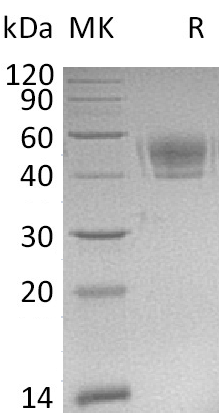 |
Greater than 95% as determined by reducing SDS-PAGE. |
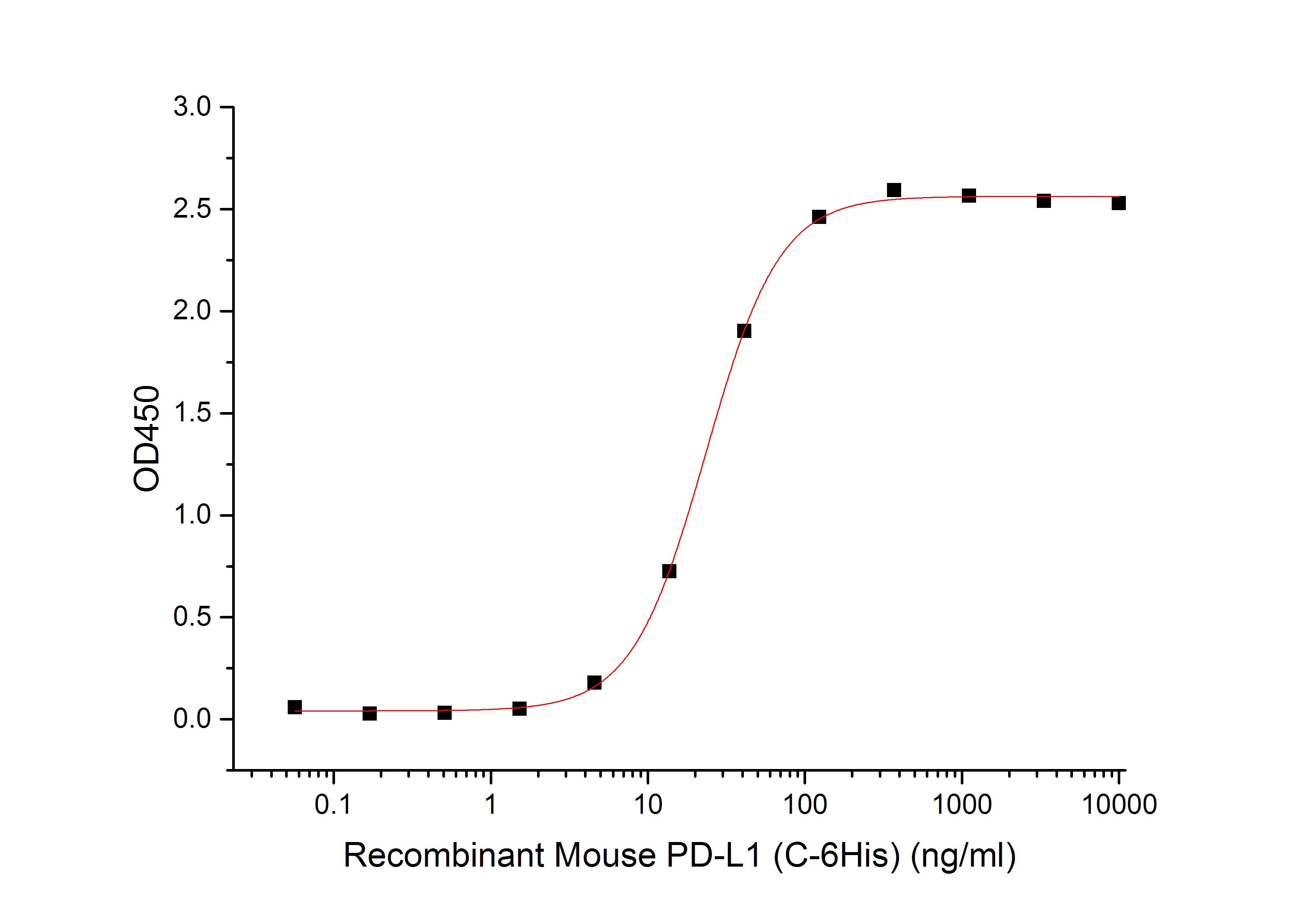 |
Immobilized Anti-Human PDL1 mAb-Fc at 2μg/ml (100 μl/well)can bind Mouse PD-L1-His.The ED50 of Mouse PD-L1-His is 23.35 ng/ml. |
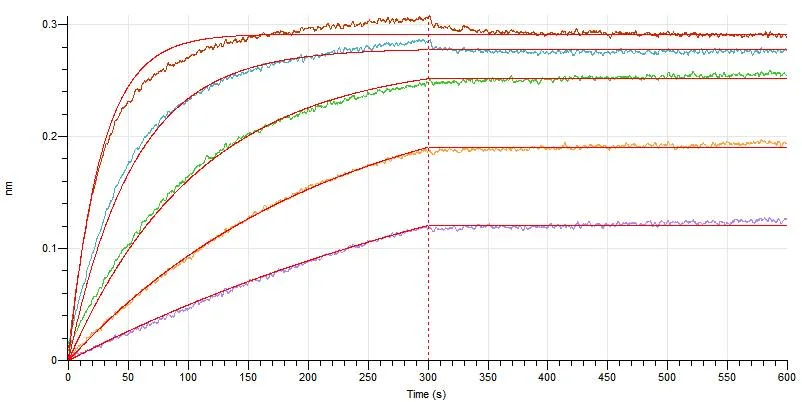 |
Loaded Mouse PD-L1-His on HIS1K Biosensor, can bind Anti-Human PDL1 mAb-Fc with an affinity constant of <10^-3 nM as determined in BLI assay. (Regularly tested) |
| 分子别名Alternative Names | Programmed cell death 1 ligand 1Cd274programmed cell death 1 ligand 1PD-L1PDCD1 ligand 1programmed death ligand 1B7 homolog 1B7-H1CD274 |
|---|---|
| 功能Function | Plays a critical role in induction and maintenance of immune tolerance to self. As a ligand for the inhibitory receptor PDCD1/PD-1, modulates the activation threshold of T-cells and limits T-cell effector response. Through a yet unknown activating receptor, may costimulate T-cell subsets that predominantly produce interleukin-10 (IL10).; The PDCD1-mediated inhibitory pathway is exploited by tumors to attenuate anti-tumor immunity and escape destruction by the immune system, thereby facilitating tumor survival. The interaction with PDCD1/PD-1 inhibits cytotoxic T lymphocytes (CTLs) effector function. The blockage of the PDCD1-mediated pathway results in the reversal of the exhausted T-cell phenotype and the normalization of the anti-tumor response, providing a rationale for cancer immunotherapy. |
| 亚细胞定位Subcellular Location | Cell membrane; Single-pass type I membrane protein. Early endosome membrane; Single-pass type I membrane protein. Recycling endosome membrane; Single-pass type I membrane protein. |
| 数据库链接Databases |
基因功能参考文献50 条
- Immunogenic mouse neuroblastoma acquires adaptive immune resistance by up-regulating PD-L1 expression, whereas PD-L1 is of lesser consequence in nonimmunogenic neuroblastoma tumors. Combining PD-L1 checkpoint inhibition with whole tumor cell/anti-CTLA-4 vaccination enhanced tumor cell killing, cured mice with established tumors, and induced long-term immune memory (6 months). PMID: 29377881 : 29377881
- Data show that programmed cell death 1 ligand 1 (PD-L1) from disparate cellular sources, including tumour cells, myeloid or other immune cells can similarly modulate the degree of cytotoxic T-cell function and activity in the tumour microenvironment. PMID: 28220772 : 28220772
- IFNbeta activates neuronal PI3K/Akt signalling and Akt binds to transcription factor FoxA1 that translocates to the nucleus and induces PDL1. Conversely, inhibition of PI3K/Akt, FoxA1 and PDL1 blocked neuronal ability to generate FoxA1(+)Tregs. PMID: 28436428 : 28436428
- suppression of inflammatory responses and T cells apoptosis were observed with elevated expression of IRAK-M and PDL-1, and interference and neutralization of these 2 molecules led to partly reversed suppression of inflammation. PMID: 29995830 : 29995830
- The present work shows the role of SOCS1 in murine melanoma development and the potential of SOCS1-silenced tumor cells in raising an effective anti-melanoma immune response. PMID: 28079159 : 28079159
- miR-142 could attenuate cecal ligation and puncture-induced inflammation and thus sepsis via targeting PD-L1 in macrophages. PMID: 29793310 : 29793310
- T-cell activation mediates the immunopreventive effects of anti-PD-1; PD-1 on T cells interacts with the PD-1 ligand PD-L1 on cancer cells PMID: 29018057 : 29018057
- an enhanced expression of PD-L1 was observed besides an increased production of IFN-gamma by TH2 cells. PMID: 28917991 : 28917991
- Study demonstrated that PD-L1 expression is up-regulated in the salivary glands of female NOD mice during the developmental phase of Sjgren's syndrome, which in turn hinders the development and onset of this disease in a negative feedback fashion. PMID: 27966604 : 27966604
- PD-L1 expression on tumor cells suppressed antigen-driven TNF production by CD8(+) T cells, which could be antagonized through PD-1 blockade PMID: 28665401 : 28665401
- Anti-PD-1/PD-L1 therapy inhibited CMT167 orthotopic lung tumors by 95%. .Silencing PD-L1 expression in CMT167 cells resulted in smaller orthotopic tumors that remained sensitive to anti-PD-L1 therapy, whereas implantation of CMT167 cells into PD-L1(-) mice blocked orthotopic tumor growth, indicating a role for PD-L1 in both the cancer cell and the microenvironment. PMID: 28819064 : 28819064
- In estrogen receptor negative breast cancer cells targeting of IL-17A inhibited PDL1 expression in the tumor microenvironment, decreasing the percentage of Treg cells in tumor-infiltrating lymphocytes, and promoting CD4+ and CD8+ T cells to secrete interferon gamma. PMID: 27935862 : 27935862
- Squamous cell carcinomas escape immune surveillance via inducing chronic activation and exhaustion of CD8+ T Cells co-expressing PD-1 and LAG-3 inhibitory receptors. PMID: 27835902 : 27835902
- Genetic ablation of a single immune-regulatory molecule in this model [i.e., B7-homolog 1 (B7-H1, PD-L1)] not only significantly increased incidence of spontaneous CNS autoimmunity and aggravated disease course, especially in the later stages of disease, but also importantly resulted in encephalitogenic T-cell infiltration and lesion formation in normally unaffected brain regions. PMID: 27671636 : 27671636
- Studied the possible role of PD-L1 on malignant melanoma initiating cells (MMICs). Found blocking of PD-L1 in melanoma cell lines impaired tumorsphere formation and induced the apoptosis. Also, blocking PD-L1 inhibited tumor growth in vivo. PMID: 29250533 : 29250533
- B7-H1 induction in keratinocytes may play a crucial role in the protection from CD4+ T cell-mediated tissue inflammation by exogenous antigens delivered from the mucosal surface in oral cavity PMID: 27731324 : 27731324
- Interferon-related secretome from direct interaction between immune cells and tumor cells is required for upregulation of PD-L1 in tumor cells. PMID: 27295261 : 27295261
- Data (including data from studies in transgenic/knockout mice) suggest that T-cell expression of Mirn155 is required to limit melanoma growth; miR-155, Pdcd1, Pdcd1l1, and Ctla4 appear to regulate overlapping pathways promoting antitumor immunity. [Mirn155 = microRNA 155; Pdcd1 = programmed cell death 1 protein; Pdcd1l1 = programmed cell death 1 ligand 1 protein; Ctla4 = cytotoxic T-lymphocyte-associated protein 4] PMID: 28912267 : 28912267
- spleen-derived IFN-gamma induces generation of PD-L1(+)-suppressive neutrophils. PMID: 28974543 : 28974543
- It was concluded that down-regulated expression of miR-143 and up-regulation of its direct target B7H1 may indicate a novel therapeutic method for radiation-induced thymic lymphoma by increased expression of miR-143 or inhibition of B7H1. PMID: 28736328 : 28736328
- HDAC6 inhibition reduces tumor growth and PD-L1 production in vivo. PMID: 26775640 : 26775640
- mediates an innate checkpoint to control adaptive T helper responses PMID: 28747424 : 28747424
- PD-L1 selectively enhances T cell-mediated immune responses, driving graft-versus-host disease lethality and suggesting a context-dependent function of the PD-1/PD-L1 axis PMID: 27294527 : 27294527
- Mesenteric lymph node CD11b(-) CD103(+) PD-L1(High) dendritic cell subset probably takes up luminal antigens in the intestine, migrates to MLNs, and highly induces regulatory T cells through TGF-beta activation. PMID: 28423181 : 28423181
- These results indicate that the outcome of PD-L1-mediated signaling in CD8+ T cells depends on the presence or absence of CD4+ T cells, the nature of the interacting receptor expressed by CD8+ T cells, and the tissue environment in which the signaling occurs. PMID: 28414296 : 28414296
- findings identify a previously unrecognized role of PD-L1 as an endogenous pain inhibitor and a neuromodulator. PMID: 28530662 : 28530662
- reduced cytotoxicity as a key mechanism by which tumor PD-L1 suppresses antitumor immunity and demonstrate that tumor PD-L1 is not just a marker of suppressed antitumor immunity. PMID: 28302645 : 28302645
- Apigenin inhibits IFN-gamma-induced PD-L1 expression by breast cancer cells, potentially rendering BC cells that lack constitutive PD-L1 expression more susceptible to T cellmediated anti-tumor immune responses. PMID: 27378243 : 27378243
- results reveal a novel CD40-dependent regulation of PD-L1 trafficking induced upon TLR3 signaling that dictates its inhibitory activity. PMID: 27911948 : 27911948
- IL-6 and PD-L1 blockade combination inhibits hepatocellular carcinoma cancer development in a mouse model. PMID: 28254435 : 28254435
- PD-1/PD-L1 plays a crucial role in maintaining immune tolerance induced by UVB-iDCs, as well as in actively controlling effector T cells specific to alloantigens. PMID: 27556047 : 27556047
- Data show that Qiyusanlong decoction (QYSL) can moderately inhibit the growth of the transplanted tumor by decreasing programmed death 1 and programmed death ligand 1 (PD-1/PD-L1) level. PMID: 27371844 : 27371844
- Expression of PD-L1 is correlated with the severity of periodontitis in the mouse model of experimental periodontitis. PMID: 26847035 : 26847035
- Loss of Cdk5 results in persistent expression of the PD-L1 transcriptional repressors, the interferon regulatory factors IRF2 and IRF2BP2, which likely leads to reduced PD-L1 expression on tumors. PMID: 27463676 : 27463676
- addition to inhibiting T cells, hepatic stellate cells (HSCs) concurrently inhibit B cells via PD-L1; this direct B cell-inhibitory activity of HSCs should contribute to the mechanism by which HSCs maintain the liver's immune homeostasis PMID: 26755818 : 26755818
- The results demonstrated that blockade of PD-1/B7H1 pathway could promote mouse NK cells to kill the GL261GSCs, and the PD-1-inhibited NK cells could be a feasible immune therapeutic approach against Glioblastoma multiforme. PMID: 26266810 : 26266810
- These findings provide evidence for a novel immune escape mechanism during acute retroviral infection based on PD-L1 expression levels on virus infected target cells PMID: 26484769 : 26484769
- These results suggest a novel and specific role for PspA in modulating immune responses against S. pneumoniae by regulating PD-L1 expression. PMID: 26214513 : 26214513
- Upregulation of PD-1 and PD-L1 was associated with marked increases in GADD153 during myocardial ischemic reperfusion injury. PMID: 25902191 : 25902191
- Breg cells can suppress through the PD-1/PD-L1 pathway in limiting the differentiation and function of TFH cells PMID: 25609381 : 25609381
- Programmed death 1/programmed death ligand 1 pathway likely plays a crucial role in the mechanisms underlying spontaneous tolerization of B cells responding to ABO-blood group antigens in liver transplantation. PMID: 26247556 : 26247556
- B7-H1 Selectively Controls TH17 Differentiation and Central Nervous System Autoimmunity via a Novel Non-PD-1-Mediated Pathway. PMID: 26378076 : 26378076
- the upregulation of IFN-beta in DCs induces the up-regulation of coinhibitory molecules B7H1 and GITRL, which cause an impaired activation of naive Ag-specific T cells PMID: 25144375 : 25144375
- IL-10 released from 18-month old mice stimulated the expression of B7-H1 on myeloid-derived suppressor cells PMID: 25479230 : 25479230
- PD-L1 expression is increased on tumor cells by direct contact with BM-derived CD11b-positive cells through the p38 signaling pathway. PMID: 25889536 : 25889536
- Our study defines PD-1 upregulated on Treg cells and its interaction with PD-1 ligand on effector T cells as one cause for the potent T cell suppression and proposes the role of PD-1 on Treg cells. PMID: 25934860 : 25934860
- Transduction of T cells with this new PD-1-CD28 receptor has the potential of breaking the PD-1-PD-L1-immunosuppressive axis in ACT. PMID: 26105028 : 26105028
- data reveal that PD-L1 is a critical modulator of Tregs' ability to suppress iALI, and this appears to involve SHP-1 activation. PMID: 25057927 : 25057927
- In experimental autoimmune uveitis, inducible Tregs use a PD-1/PD-L1 mechanism to suppress the disease. PMID: 25877928 : 25877928
- Immunological in vivo effects of B7-H1 deficiency PMID: 25173046 : 25173046
蛋白复溶体积计算器缓冲液体积 = 蛋白质量 ÷ 蛋白浓度
输入任意两项,第三项自动计算 |
蛋白浓度稀释计算器初浓度 × 初体积 = 终浓度 × 终体积
输入任意三项,第四项自动计算 |



