


| 纯度Purity | Greater than 97% as determined by reducing SDS-PAGE. |
|---|---|
| 内毒素Endotoxin | Please contact with the lab for this information |
| 蛋白构建Protein Construction |
【Gly22-Ser98】序列区间
|
| Accession | Q99731 |
| 表达宿主Expression Host | - |
| 种属Species | Homo sapiens (Human) |
| 预测分子量Predicted MW | 10.1 kDa |
| 制剂Formulation | Lyophilized from a 0.2 μm filtered solution of 20mM Tris, 150mM NaCl, pH8.0, containing 1mM EDTA, 1mM DTT, 0.01% SKL, 5% Trehalose and Proclin300. |
| 运输方式Shipping | The product is shipped with ice bag. Upon receipt, store it immediately at the temperature listed below. |
| 稳定性&储存Stability & Storage | 12 months at -20°C to -80°C in lyophilized state.6 months at -20°C to -80°C under sterile conditions after reconstitution.7-10 days at 2°C to 8°C under sterile conditions after reconstitution.Please minimize freeze-thaw cycles. |
| 复溶Reconstitution | Reconstitute in 20mM Tris, 150mM NaCl (PH8.0) to a concentration of 0.1-1.0 mg/mL. Do not vortex. |
 |
Greater than 97% as determined by reducing SDS-PAGE. |
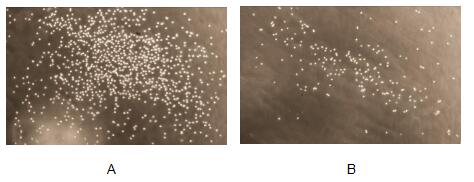 |
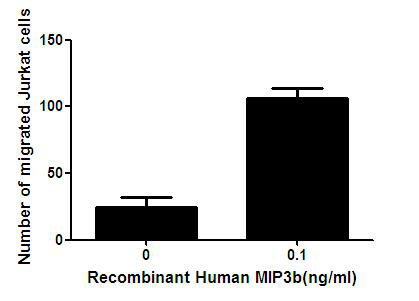
Macrophage Inflammatory Protein 3 Beta (MIP3b) is a small cytokine belonging to the CC chemokine family that is also known as EBI1 ligand chemokine (ELC) and Chemokine C-C motif ligand 19 (CCL19). This chemokine elicits its effects on its target cells by binding to the chemokine receptor chemokine receptor CCR7. It attracts certain cells of the immune system, including dendritic cells and antigen-engaged B cells, CCR7 central-memory T-Cells. Thus, chemotaxis assay used 24-well microchemotaxis system was undertaken to detect the chemotactic effect of recombinant human MIP3b on the Jurkat cell line. Briefly, Jurkat cells were seeded into the upper chambers (150μL cell suspension,106 cells/mL in RPMI 1640 with FBS free) and MIP3b (0.01ng/mL, 0.1ng/mL, 1ng/mL, 10ng/mL, 100ng/mL and 1000ng/mL diluted separately in serum free RPMI 1640) was added in lower chamber with a polycarbonate filter (8μm pore size) used to separate the two compartments. After incubation at 37℃ with 5% CO2 for 3h, the filter was removed, then cells in low chamber were observed by inverted microscope at low magnification (×100) and the number of migrated cells were counted at high magnification (×400) randomly (five fields for each filter). Result shows MIP3b is able to induce migration of Jurkat cells. The migrated Jurkat cells in low chamber at low magnification (×100) were shown in Figure 1. Five fields of each chamber were randomly chosen, and the migrated cells were counted at high magnification (×400). Statistical results were shown in Figure 2. The optimum chemotaxis of recombinant human MIP3b occurs at 0.1-1ng/mL. (A) Jurkat cells were seeded into the upper chambers and serum free RPMI 1640 with 0.1ng/mL MIP3b was added in lower chamber, then cells in lower chamber were observed at low magnification (×100) after incubation for 3h; (B) Jurkat cells were seeded into the upper chambers and serum free RPMI 1640 without MIP3b was added in lower chamber, then cells in lower chamber were observed at low magnification (×100) after incubation for 3h. Figure. The chemotactic effect of recombinant human MIP3b on Jurkat cells. Figure. The chemotactic effect of recombinant human MIP3b on Jurkat cells. |
 |
| 分子别名Alternative Names | CCL19CKb11ELCMIP3-BSCYA19Chemokine C-C-Motif Ligand 19Beta Chemokine Exodus-3CK Beta-11EBI1-Ligand ChemokineSmall Inducible Cytokine Subfamily A19 |
|---|---|
| 背景介绍Background | May play a role not only in inflammatory and immunological responses but also in normal lymphocyte recirculation and homing. May play an important role in trafficking of T-cells in thymus, and T-cell and B-cell migration to secondary lymphoid organs. Binds to chemokine receptor CCR7. Recombinant CCL19 shows potent chemotactic activity for T-cells and B-cells but not for granulocytes and monocytes. Binds to atypical chemokine receptor ACKR4 and mediates the recruitment of beta-arrestin (ARRB1/2) to ACKR4. |
| 功能Function | May play a role not only in inflammatory and immunological responses but also in normal lymphocyte recirculation and homing. May play an important role in trafficking of T-cells in thymus, and T-cell and B-cell migration to secondary lymphoid organs. Binds to chemokine receptor CCR7. Recombinant CCL19 shows potent chemotactic activity for T-cells and B-cells but not for granulocytes and monocytes. Binds to atypical chemokine receptor ACKR4 and mediates the recruitment of beta-arrestin (ARRB1/2) to ACKR4. |
| 亚细胞定位Subcellular Location | Secreted. |
| 数据库链接Databases |
基因功能参考文献50 条
- these data indicate CCL19/CCR7 contributes to proliferation and invasion of ESCs, which are conducive to the pathogenesis of endometriosis through activating PI3K/Akt pathway PMID: 28856757 : 28856757
- The research findings demonstrate for the first time that the chemokines CCL19, CCL21 and CCR7 play important roles in bone destruction by increasing osteoclast migration and resorption activity, and that has been linked to rheumatoid arthritis pathogenesis. PMID: 28729639 : 28729639
- breast cancers-derived soluble factors increase the migration of DCs toward CCL19. PMID: 27451948 : 27451948
- The migratory index to the CCR7 ligands, CCL19 and CCL21, was higher in T-cells from donors whose recipients will develop GvHD. PMID: 28112745 : 28112745
- Study confirmes that CCL19 induces the invasion and migration of breast cancer cells through the expression of markers of epithelial-mesenchymal transition. PMID: 28378417 : 28378417
- findings connect NOTCH1, DUSP22, and CCL19-driven chemotaxis within a single functional network, suggesting that modulation of the homing process may provide a relevant contribution to the unfavorable prognosis associated with NOTCH1 mutations in CLL. PMID: 28017968 : 28017968
- Deletion of this extended C-terminus reduces CCL21's affinity for heparin and transferring the CCL21 C-terminus to CCL19 enhances heparin binding mainly through non-specific, electrostatic interactions PMID: 27338641 : 27338641
- CCL19 is significantly overexpressed in patients with unstable carotid atherosclerotic plaques and may be a possible novel biomarker for identifying high-risk patients in whom more urgent intervention may be indicated. PMID: 27498092 : 27498092
- CrkL regulates CCL19 and CCR7-induced epithelial-to-mesenchymal transition via ERK signaling pathway in epithelial ovarian carcinoma patients. PMID: 25636509 : 25636509
- The solution structure of CCL19 is reported. It contains a canonical chemokine domain. Chemical shift mapping shows the N-termini of PSGL-1 and CCR7 have overlapping binding sites for CCL19 and binding is competitive. PMID: 26115234 : 26115234
- Our findings serve to elucidate the molecular mechanisms underlying the resistin induction of CCL19 expression in ECs and the shear-stress protection against this induction. PMID: 25656506 : 25656506
- The mRNA levels of CCL19/CCL21 in ankylosing spondylitis hip ligament were significantly higher than in osteoarthritis ligament. PMID: 25260647 : 25260647
- Serum CCL19 and CCL21 were up-regulated during Rickettsia conorii infection. PMID: 24507453 : 24507453
- CCL19 promoted monocyte adhesion to HUVEC cells. CCL19 rs2227302 was associated with coronary artery disease in a Chinese Han population. PMID: 24990231 : 24990231
- CCL19 is an antimicrobial protein with bacteriocidal activity against E. coli. PMID: 12949249 : 12949249
- CCL19 (rather than CCL21) may contribute to the accumulation of dendritic cells and macrophages in the inflamed lungs of patients with eosinophilic pneumonia. PMID: 24111618 : 24111618
- CIP4 is expressed at abnormally high levels in CLL cells, where it is required for CCL19-induced chemotaxis. PMID: 23644527 : 23644527
- Serum CCL19 measurement is a new hallmark of the B cell-mediated rheumatoid arthritis subtype and may predict clinical response to rituximab. PMID: 23740460 : 23740460
- A high expression of CCL19 was a good prognostic factor of lung adenocarcinoma. PMID: 23922113 : 23922113
- Our findings would suggest that CCL19 and CCL21 may not be associated with cervical lymph node metastasis or other clinical and microscopic factors in oral squamous cell carcinoma. PMID: 22976543 : 22976543
- a novel signaling pathway that controls EDG-1 up-regulation following stimulation of T cells by CCR7 and CCL19. PMID: 22334704 : 22334704
- involvement of CCL19 in AIDS patients with advanced immunodeficiency, potentially mediating both adaptive and maladaptive responses PMID: 22288592 : 22288592
- These results suggest a new combinatorial guiding mechanism by CCL19 and CCL21 for the migration and trafficking of CCR7 expressing leukocytes. PMID: 21464944 : 21464944
- increased expression of MIP-3alpha favors recruitment of immature DCs to the tumour bed, whereas de novo local expression of SLC and MIP-3beta induces accumulation of mature DCs at the tumour margin forming clusters with T-cells PMID: 20969772 : 20969772
- Klebsiella pneumoniae-triggered DC recruit human NK cells in a CCR5-dependent manner leading to increased CCL19-responsiveness and activation of NK cells. PMID: 20865789 : 20865789
- Nuclear localization of four and a half LIM domains 2 (FHL2) transgene is lost in mature but not immature bone marrow-derived dendritic cells following stimulation with CCL19. PMID: 20592280 : 20592280
- The CCL19 is known to be critically involved in lymphocyte and dendritic cell trafficking, CCL19-binding competition by CRAM might be involved in modulating these processes. PMID: 20002784 : 20002784
- CC chemokine CCL19 attracts mature T cells out of the fetal thymus organ culture. PMID: 11869682 : 11869682
- Desensitizing concentrations of CCL21 and CCL19 had no significant effects on T lymphocyte transendothelial migration. PMID: 11870628 : 11870628
- located in high endothelial venules in an appropriate location to induce transendothelial migration of CLL cells into lymph nodes PMID: 11929789 : 11929789
- Characterization of mouse CCX-CKR, a receptor for the lymphocyte-attracting chemokines TECK/mCCL25, SLC/mCCL21 and MIP-3beta/mCCL19: comparison to human CCX-CKR. (CCX-CKR) PMID: 11981810 : 11981810
- migration to CCL19 and CCL21 is dependent on phospholipase C and intracellular calcium flux but not on phosphatidylinositol-3 kinase PMID: 14592837 : 14592837
- CCL19 and CXCL12 have roles in chemotaxis of mantle cell lymphoma B cells PMID: 14871974 : 14871974
- MIP-3beta was expressed in the human endometrium, but our results could not strongly support the hypothesis that MIP-3beta is a potential chemoattractant for endometrial NK cells. PMID: 15019823 : 15019823
- The ccl19 migrated poorly towards the GFP UCB or normal (NL) BM CD34+ cells, p210 UCB and CML CD34+ cells. PMID: 15674360 : 15674360
- By conditioning naive T cells into a motile dendritic cell-scanning state, CCL19 promotes antigen-independent responses and increases the probability of cognate histocompatibility complex (MHC)-peptide encounter. PMID: 16081805 : 16081805
- Nitric oxide (NO) donor NOR4 provides a signal allowing LPS-stimulated DCs to migrate toward CCL19. PMID: 16249377 : 16249377
- The maturation, in vitro migration and cytokine production of human DC after stimulation with live H. pylori is reported. PMID: 16500130 : 16500130
- The CCL19,CCL21/CCR7 chemokine system is expressed in inflamed muscles of polymyositis and may be involved in the pathomechanism of polymyositis. PMID: 16887149 : 16887149
- Despite sharing only 25% sequence identity with CCL21, the amino terminal hexapeptide of CCL19 is capable of performing an in vitro role similar to that of CCL21, resulting in G protein activation of the CCR7 receptor. PMID: 16904643 : 16904643
- CXCL13 and CCL19 cooperatively induce significant resistance to TNF-alpha-mediated apoptosis in acute and chronic B cell leukemia CD23+CD5+ B cells, but not in the cells from cord blood. PMID: 17082584 : 17082584
- Expression of the CCL19 gene is regulated by a combined action of several members of the NF-kappaB, IRF, and STAT family transcription factors. PMID: 17182562 : 17182562
- The abundance of CD83+ plasmacytoid dendritic cells (DCs) in perivascular areas and the overexpression of CCL19 and CCL21 in perivascular cellular foci suggest plasmacytoid DCs are central to the muscle inflammation in juvenile dermatomyositis. PMID: 17469160 : 17469160
- These findings suggest hitherto unknown roles of SMAD transcription factors and of CCL19 in the elicitation phase of allergic contact dermatitis. PMID: 17597826 : 17597826
- CCL19 plus CXCL13 regulate interaction between B-ALL CD23+CD5+ B cells and CD8+ T cells by inducing activation of PEG10, in turn, resulting in IL-10 overexpression and impairment of tumor-specific cytotoxicity in syngeneic CD8+ T cells. PMID: 17709502 : 17709502
- This study suggests that CCL19 plays a role in both the physiological immunosurveillance of the healthy CNS and the pathological maintenance of immune cells in the CNS of MS patients. PMID: 17825430 : 17825430
- after HIV-1 infection of CCL19- or CCL21-treated CD4(+) T-cells, low-level HIV-1 production but high concentrations of integrated HIV-1 DNA, approaching that seen in mitogen-stimulated T-cell blasts, was observed PMID: 17881634 : 17881634
- CCL19, CCL20 and CCL22 factors could play an additive role in the pathogenesis of the inflammatory process leading to bronchiolar fibro-obliteration in lung transplant patients PMID: 18047937 : 18047937
- experiments performed to investigate the survival, adhesion, and metalloproteases secretion indicate that CXCL13 combined with CCL19 and CCL21 mainly affects the chemotaxis of Sezary syndrome cells PMID: 18757429 : 18757429
- Complement C1q chemoattracts human dendritic cells and enhances migration of mature dendritic cells to CCL19 via activation of AKT and MAPK pathways.( PMID: 18838169 : 18838169
蛋白复溶体积计算器缓冲液体积 = 蛋白质量 ÷ 蛋白浓度
输入任意两项,第三项自动计算 |
蛋白浓度稀释计算器初浓度 × 初体积 = 终浓度 × 终体积
输入任意三项,第四项自动计算 |



