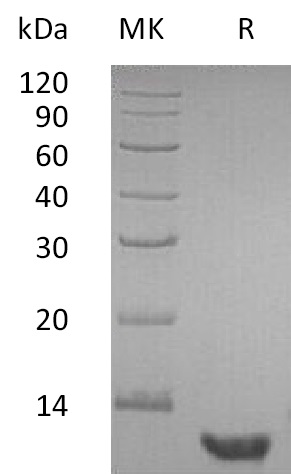
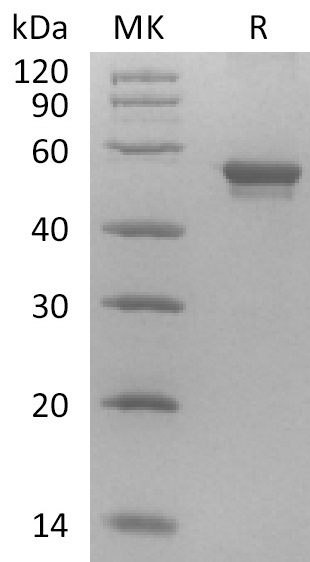
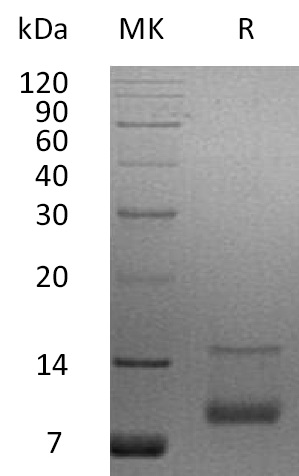
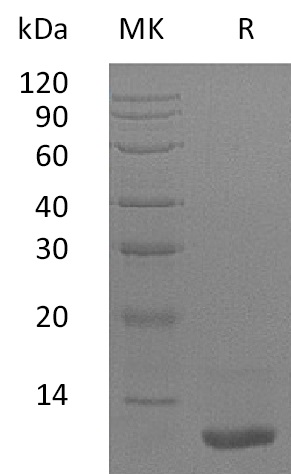
| 纯度Purity | Greater than 95% as determined by reducing SDS-PAGE |
|---|---|
| 内毒素Endotoxin | <1 EU/µg as determined by LAL test. |
| 蛋白构建Protein Construction |
【Thr23-Asp159】序列区间-FcC 端标签
|
| Accession | P37173 |
| 表达宿主Expression Host | HEK293 |
| 种属Species | Human |
| 预测分子量Predicted MW | 42.6 kDa |
| 制剂Formulation | Lyophilized from a 0.2 μm filtered solution of 20mM PB, 150mM NaCl, pH 7.4. |
| 运输方式Shipping | The product is shipped with ice bag. Upon receipt, store it immediately at the temperature listed below. |
| 稳定性&储存Stability & Storage | 12 months at -20°C to -80°C in lyophilized state.6 months at -20°C to -80°C under sterile conditions after reconstitution.7-10 days at 2°C to 8°C under sterile conditions after reconstitution.Please minimize freeze-thaw cycles. |
| 复溶Reconstitution | Always centrifuge tubes before opening. Do not mix by vortex or pipetting. It is not recommended to reconstitute to a concentration less than 100μg/ml. Dissolve the lyophilized protein in distilled water. Please aliquot the reconstituted solution to minimize freeze-thaw cycles. |
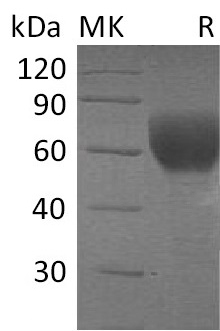 |
Greater than 95% as determined by reducing SDS-PAGE. (QC verified) |
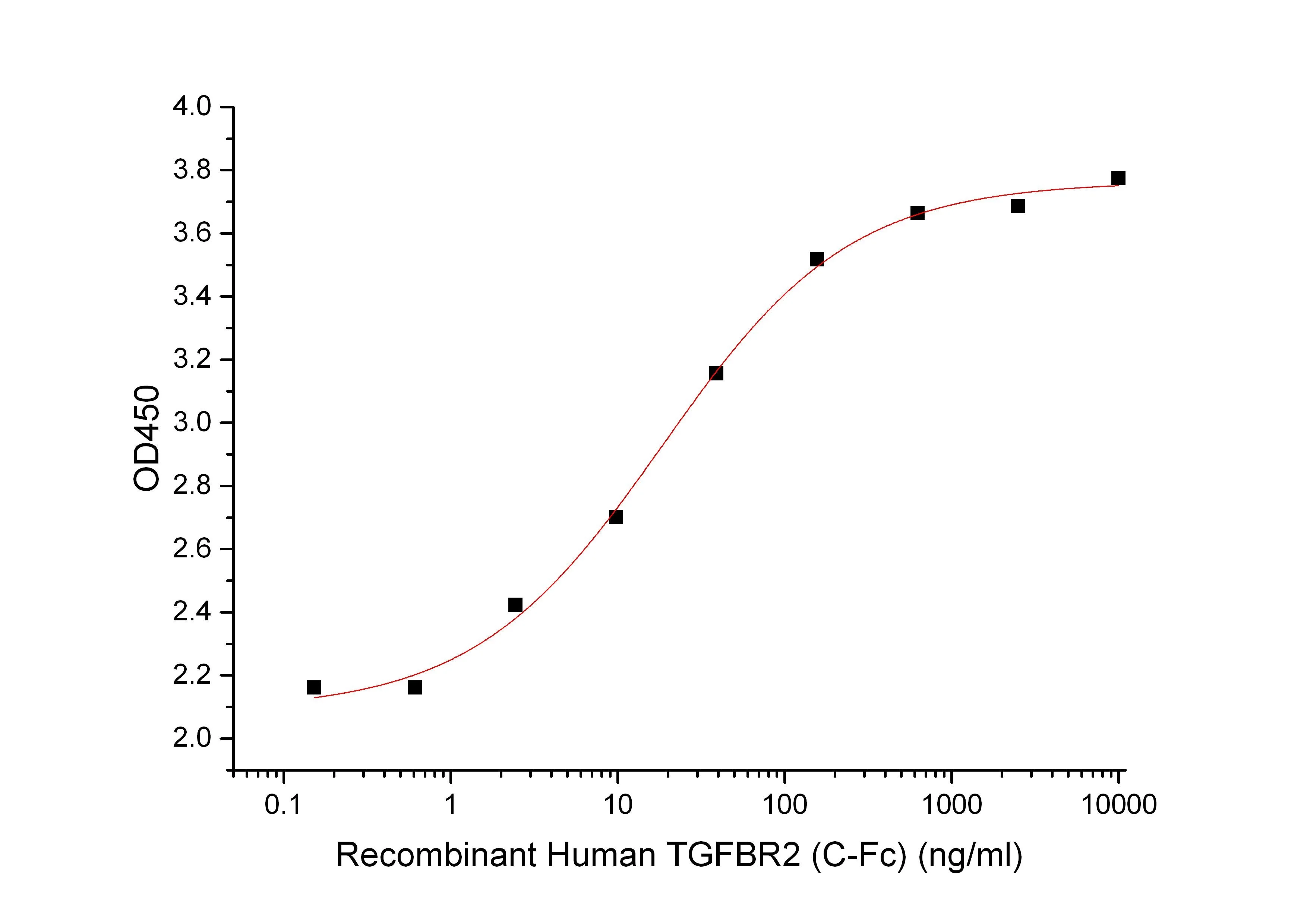 |
Measured by its ability to inhibit TGF-beta 1 activity on TF‑1 human erythroleukemic cells. The ED50 for this effect is 18.41 ng/ml in the presence of 100pg/ml of recombinant human TGF-beta 1. (Regularly tested) |
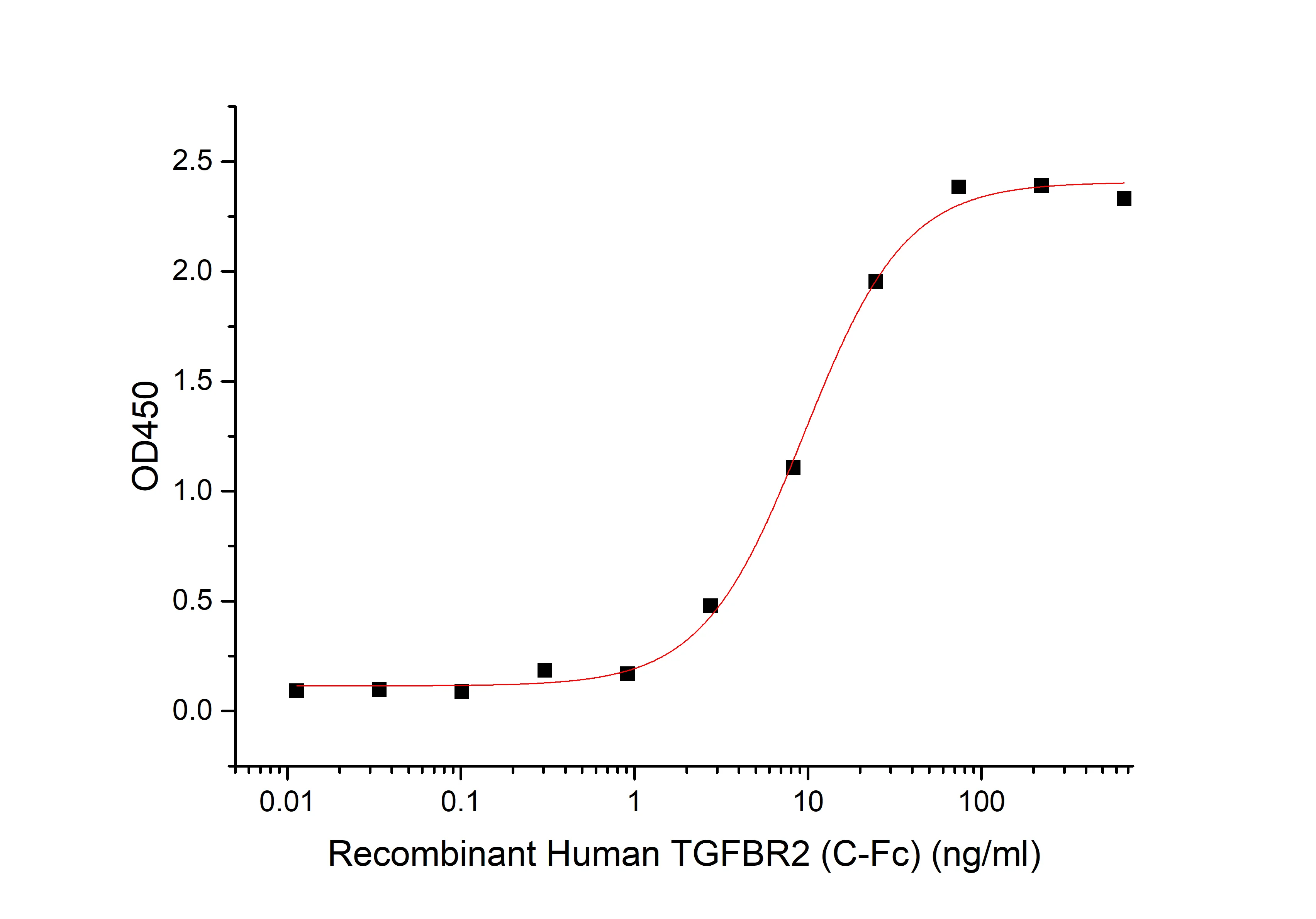 |
Immobilized Biotinylated Human TGF-beta 1-Avi at 2μg/ml (100 μl/well) can bind Human TGFBR2-Fc.The ED50 of Human TGFBR2-Fc is 9.47ng/ml. (Regularly tested) |
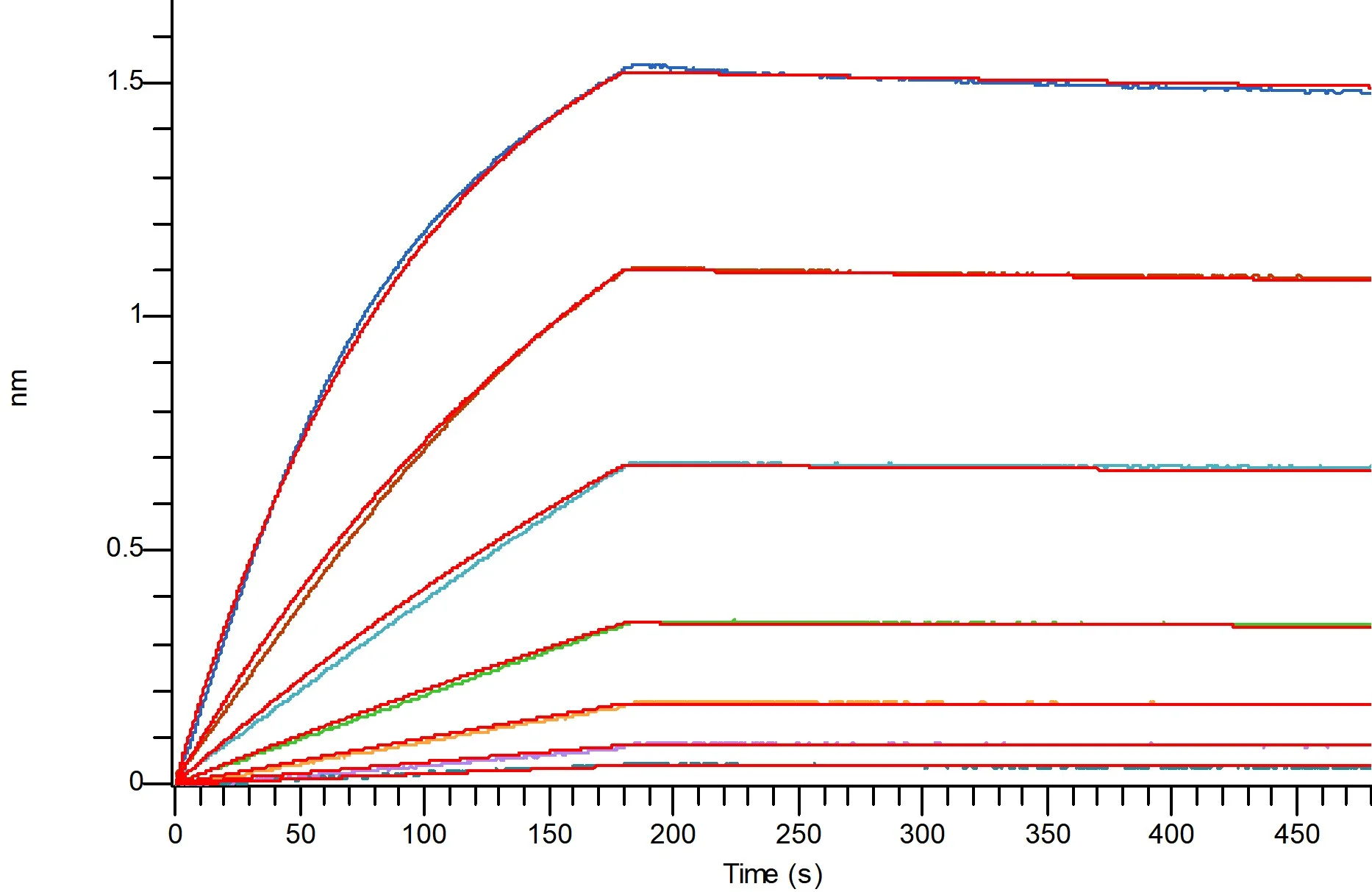 |
Loaded Biotinylated Human TGF-beta 1 on SA Biosensor, can bind Recombinant Human TGFBR2 with an affinity constant of 0.927nM as determined in BLI assay. (Regularly tested) |
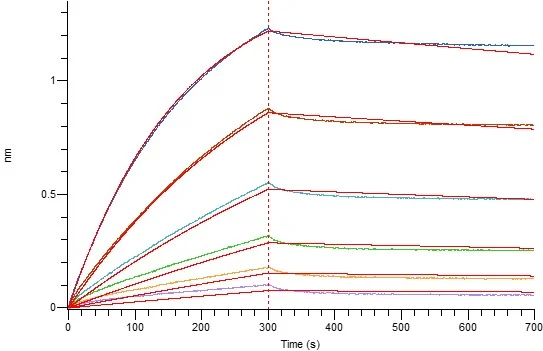 |
Loaded Biotinylated Human TGF-beta 3 on SA Biosensor, can bind Human TGFBR2-Fc with an affinity constant of 0.38 nM as determined in BLI assay. (Regularly tested) |
| 分子别名Alternative Names | TGF-beta receptor type-2TGF-beta type II receptorTGFBR2Transforming growth factor-beta receptor type II |
|---|---|
| 功能Function | Transmembrane serine/threonine kinase forming with the TGF-beta type I serine/threonine kinase receptor, TGFBR1, the non-promiscuous receptor for the TGF-beta cytokines TGFB1, TGFB2 and TGFB3. Transduces the TGFB1, TGFB2 and TGFB3 signal from the cell surface to the cytoplasm and is thus regulating a plethora of physiological and pathological processes including cell cycle arrest in epithelial and hematopoietic cells, control of mesenchymal cell proliferation and differentiation, wound healing, extracellular matrix production, immunosuppression and carcinogenesis. The formation of the receptor complex composed of 2 TGFBR1 and 2 TGFBR2 molecules symmetrically bound to the cytokine dimer results in the phosphorylation and the activation of TGFRB1 by the constitutively active TGFBR2. Activated TGFBR1 phosphorylates SMAD2 which dissociates from the receptor and interacts with SMAD4. The SMAD2-SMAD4 complex is subsequently translocated to the nucleus where it modulates the transcription of the TGF-beta-regulated genes. This constitutes the canonical SMAD-dependent TGF-beta signaling cascade. Also involved in non-canonical, SMAD-independent TGF-beta signaling pathways. |
| 亚细胞定位Subcellular Location | Cell membrane; Single-pass type I membrane protein. Membrane raft. |
| 数据库链接Databases |
基因功能参考文献50 条
- Data show that activated proto-oncogene protein Akt (AKT) directly phosphorylates Fas associated factor 1 (FAF1) reduces FAF1 at the plasma membrane and results in an increase in TGF-beta type II receptor (TbetaRII) at the cell surface. PMID: 28443643 : 28443643
- TGFBR2 Polymorphisms Are Associated with Colorectal Cancer in Patients with Lynch Syndrome. PMID: 30275229 : 30275229
- This study has confirmed or corrected the clinical diagnosis, and enlarged the mutation spectrum of FBN1 and TGFBR2 and confirmed that parental mosaicism may be the cause of the varied phenotypic expression of these connective tissue disorders.The results should be helpful for prenatal diagnosis and genetic counseling. PMID: 30101859 : 30101859
- the restoration of TGFBR2 in miR-204 overexpression Gastric cancer (GC) cells, which recovered resistance to 5-FU treatments compared with miR-204 overexpression GC cells. PMID: 29940566 : 29940566
- MiR-9-5p promotes the proliferation, metastasis and invasion of non-small cell lung cancer cells by down-regulating TGFBR2 expression. PMID: 29239816 : 29239816
- Microarray-based analyses revealed that the expression of miR-20b was significantly increased, whereas TGFBR2 and MYC were significantly downregulated and upregulated, respectively, in all ES cells compared to their expression in human mesenchymal stem cells (hMSCs). PMID: 29039480 : 29039480
- this study provides evidence that TGFBR2 rs6785358 polymorphism might be associated with the risk of hypospadias. PMID: 28894026 : 28894026
- Down-regulation of TGF-beta RII was found in the invasive non-functioning pituitary adenomas compared to noninvasive ones. PMID: 29031543 : 29031543
- findings reveal a novel role for miR-204/ANGPT1/TGFbetaR2 axis in tumor angiogenesis. We propose that therapeutic manipulation of miR-204 levels may represent a promising approach in breast cancer. PMID: 27703260 : 27703260
- High TGFBR2 expression is associated with small cell lung cancer. PMID: 28055980 : 28055980
- expression induced by IL-6 in keratinocytes PMID: 27892604 : 27892604
- hsa-miR-1193 may be involved in sporadic colorectal cancer tumourigenesis at least in part by suppression of TGFBR2, and the A allele of rs11466537 disturbed the regulation of hsa-miR-1193 on TGFBR2. PMID: 28494187 : 28494187
- Results show that TGFbR2 expression decreases in human gastric cancer (GC) tissue specimens and indicate that the expression of TGFbR2 is mainly dependent on post-transcriptional regulators in GC through miR-155 binding to the 3'-UTR of its mRNA. PMID: 29247570 : 29247570
- This study demonstrated that Increased Transforming Growth Factor beta2 in the Neocortex of Alzheimer's Disease and Dementia with Lewy Bodies is Correlated with Disease Severity and Soluble Abeta42 Load. PMID: 27911312 : 27911312
- Data indicate the most significant gene level association seen with transforming growth factor beta receptor 2 (TGFBR2) and clear cell epithelial ovarian cancer (EOC). PMID: 27533245 : 27533245
- Abnormal expression of TGF-beta type II receptor isoforms contributes to prognosis in acute myeloid leukemia. PMID: 28052022 : 28052022
- altered Tgfbeta signaling in cultured mouse and human enteroids supports further the in vivo data and reveals a critical role for Tgfbeta signaling in generating precursor secretory cells. Overall, our data reveal a key role for Tgfbeta signaling in regulating ISCs clonal dynamics and differentiation, with implications for cancer, tissue regeneration, and inflammation. PMID: 27791005 : 27791005
- MiR-130 is up-regulated in gastric cancer (GC) tissues and directly targets TGF-beta type II receptor (TGFbetaR2). PMID: 27304191 : 27304191
- miR-17-5p negatively regulated TGFBR2 expression by directly binding to the 3'UTR of TGFBR2 mRNA, thereby promoting gastric cancer cell growth and migration. PMID: 27120811 : 27120811
- High TGFBR2 expression is associated with mesenchymal to epithelial transition of breast cancer. PMID: 28987542 : 28987542
- Inhibition of TGFBR2 had the similar effect as miR-9 overexpression. PMID: 27756824 : 27756824
- we describe and characterize the functional impact of a novel VUS in the TGFBR2 kinase domain (c.1255G>T; p.Val419Leu), in a patient with the clinical diagnosis of Marfan syndrome spectrum. Our results establish that the V419L variant leads to aberrant TGF-beta signaling and confirm the diagnosis of Loeys-Dietz syndrome in this patient. PMID: 28679693 : 28679693
- Apo and inhibitor-bound TGFBR2 kinase structures are presented at high resolution (<2 A). PMID: 27139629 : 27139629
- TGF-beta type I, II, and III receptors were all identified in pregnant serum; all were substantially elevated in early-onset but not late-onset PE. Endoglin was increased in both subtypes. PMID: 28633389 : 28633389
- this is the first clinical report to demonstrate a potential causal association between TGFB2 gene mutations and aortic root dilatation in combination with the myxomatous degeneration of both atrioventricular valves. PMID: 28633253 : 28633253
- Molecular modeling and molecular dynamic simulation of the effects of variants in the TGFBR2 kinase domain as a paradigm for interpretation of variants obtained by next generation sequencing. PMID: 28182693 : 28182693
- A novel mutation in the TGFBR2 gene was identified in a patient with Loeys-Dietz syndrome. PMID: 28344185 : 28344185
- ZNF32 was found to directly bind to the TGF-betaR2 (transforming growth factor-beta receptor 2) promoter to promote its expression. PMID: 27763636 : 27763636
- High TGFBR2 expression is associated with glioma. PMID: 28184932 : 28184932
- these findings delineate the important function of the TGFbeta signaling pathway in the early development of kidney and TbetaRII was shown to be able to promote the expression of Six2 through Smad3 mediating transcriptional regulation and in turn activate the proliferation of MM cells. PMID: 28420207 : 28420207
- YAP-1 promotes Tregs differentiation in hepatocellular carcinoma by enhancing TGFBR2 transcription. PMID: 28472799 : 28472799
- Gasdermin C is upregulated by inactivation of Tgfbr2 in the presence of mutated Apc, promoting colorectal cancer cell proliferation. PMID: 27835699 : 27835699
- Depending on the TGFBR2 expression status of their donor cells, shed exosomes show distinct proteomic signatures and promote altered cytokine secretion profiles in recipient cells. PMID: 28376875 : 28376875
- miR-520f inhibited tumor cell invasion by directly targeting ADAM9 and the TGFbeta receptor TGFBR2. PMID: 28209612 : 28209612
- Study demonstrated that the TGFBR2 mutation was not present in the sample of cervico-cerebral artery dissection patients (CCAD); however, a positive association was identified between the MTHFR-C677T polymorphism and genetically confirmed Mexican mestizo spontaneous CCAD patients PMID: 27017342 : 27017342
- A genetic investigation found a TGFbetaR2 gene mutation, leading to the diagnosis of Loeys-Dietz syndrome type2. PMID: 27017362 : 27017362
- The results showed that transfection of CD34(+) cells with SiRNA targeting TGF-bRII and their co-culture with human bone marrow mesenchymal stromal cells (MSCs) could considerably increase the number of progenitors PMID: 27344285 : 27344285
- Cell invasion (matrigel) was reduced only in the Hs578T cells (p < 0.01). Silencing decreased the expression of the prometastatic molecules S100A4 and TGFbetaR2 in both cell lines and CD44 in Hs578T cells. We conclude that ECM1 is a key player in the metastatic process and regulates the actin cytoskeletal architecture of aggressive breast cancer cells at least in part via alterations in S100A4 and Rho A. PMID: 27770373 : 27770373
- Our study uncovers a novel mechanism that miR-19a-3p/19b-3p inhibits autophagy-mediated fibrogenesis by targeting TGF-beta R II. PMID: 27098600 : 27098600
- TGFBR2 signaling can affect Notch1 glycosylation via regulation of glycosyltransferase LFNG expression and provide a first mechanistic example for altered glycosylation in microsatellite instability colorectal tumor cells. PMID: 27156840 : 27156840
- CD44 and TGFBR2 are the functional targets of miR-373, which are responsible for the tumor suppressive functions of miR-373 PMID: 26858153 : 26858153
- Polymorphism of TGFBR2 is associated with coronary artery disease. PMID: 27234600 : 27234600
- Results found TGFBR2 to be significantly related to the regulated phosphoproteome in glioblastoma as a result of integrative upstream kinase/ regulator analyses and experimentally validated as a novel regulator of glioblastoma stem cells. PMID: 26670566 : 26670566
- Reduced expression of TGF-beta type II receptor and extracellular matrix components in response to reduced fibroblast size/mechanical force was fully reversed by restoring size/mechanical force PMID: 26780887 : 26780887
- results suggested that high CDKN1A/p21 and low TGFBR2 expression was closely correlated with adverse pathological parameters and poor prognosis in breast cancer. PMID: 26823785 : 26823785
- Findings suggest that the upregulation of miR-590-5p promotes cellular malignant behavior via the target gene TGFbetaRII in vulvar squamous cell carcinoma. PMID: 26498065 : 26498065
- TGFBR2 is regulated by an epigenetic auto-feedback regulation in non-small cell lung cancer. PMID: 26356817 : 26356817
- we reported a sporadic Japanese case of LDS with a novel TGFBR2 p.Y424H mutation, which appeared to cause pregnancy-related fatal aortic/arterial dissections. PMID: 26301661 : 26301661
- AT2R downregulates the expression of TGF-betaRII in human proximal tubule cells PMID: 26867007 : 26867007
- High levels of TbetaRII expression were associated with lymph node metastasis, increasing tumor clinical stage, and poorer 5-year disease-free survival in patients with breast cancer. TbetaRII may be a potential prognostic marker for breast cancer. PMID: 26551005 : 26551005
蛋白复溶体积计算器缓冲液体积 = 蛋白质量 ÷ 蛋白浓度
输入任意两项,第三项自动计算 |
蛋白浓度稀释计算器初浓度 × 初体积 = 终浓度 × 终体积
输入任意三项,第四项自动计算 |