Recombinant Human REG1A (C-6His)
Alternative NamesLithostathine-1-Alpha; Islet Cells Regeneration Factor; ICRF; Islet of Langerhans Regenerating Protein; REG; Pancreatic Stone Protein; PSP; Pancreatic Thread Protein; PTP; Regenerating Islet-Derived Protein 1-Alpha; REG-1-Alpha; Regenerating Protein I Alpha; REG1A; PSPS; PSPS1; REG
规格参数 Specifications
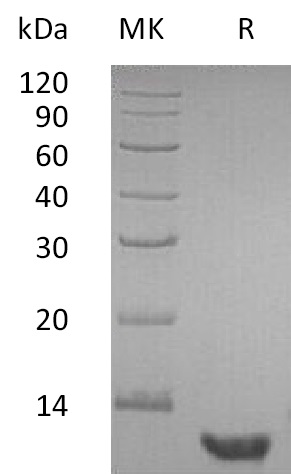
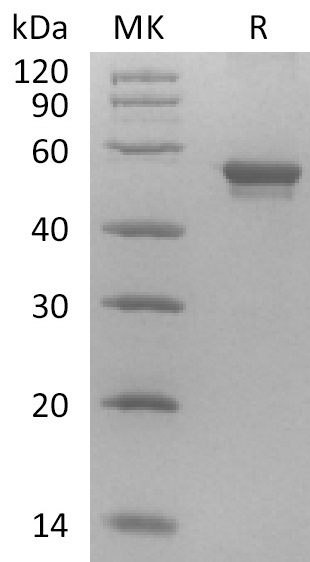
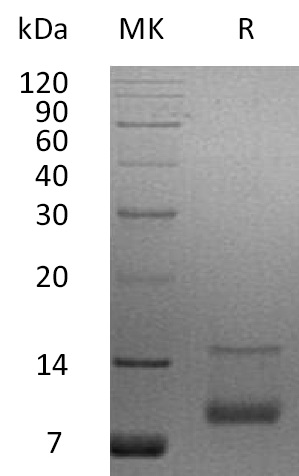
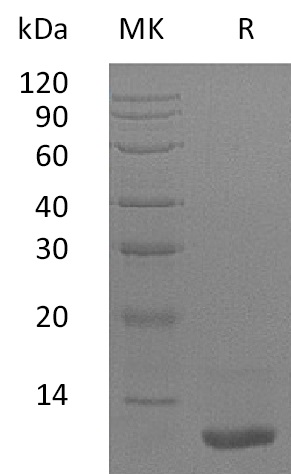
| 纯度Purity | Greater than 95% as determined by reducing SDS-PAGE |
|---|---|
| 内毒素Endotoxin | <1 EU/µg as determined by LAL test. |
| 蛋白构建Protein Construction |
【Gln23-Asn166】序列区间-6HisC 端标签
|
| Accession | P05451 |
| 表达宿主Expression Host | HEK293 |
| 种属Species | Human |
| 预测分子量Predicted MW | 17.31 kDa |
| 制剂Formulation | Lyophilized from a 0.2 μm filtered solution of 20mM PB, 150mM NaCl, pH 7.2. |
| 运输方式Shipping | The product is shipped with ice bag. Upon receipt, store it immediately at the temperature listed below. |
| 稳定性&储存Stability & Storage | 12 months at -20°C to -80°C in lyophilized state.6 months at -20°C to -80°C under sterile conditions after reconstitution.7-10 days at 2°C to 8°C under sterile conditions after reconstitution.Please minimize freeze-thaw cycles. |
| 复溶Reconstitution | Always centrifuge tubes before opening. Do not mix by vortex or pipetting. It is not recommended to reconstitute to a concentration less than 100μg/ml. Dissolve the lyophilized protein in distilled water. Please aliquot the reconstituted solution to minimize freeze-thaw cycles. |
!
本司产品仅用于科研,不用于临床诊断和治疗。
产品图片 Product Images点击图片可查看原图
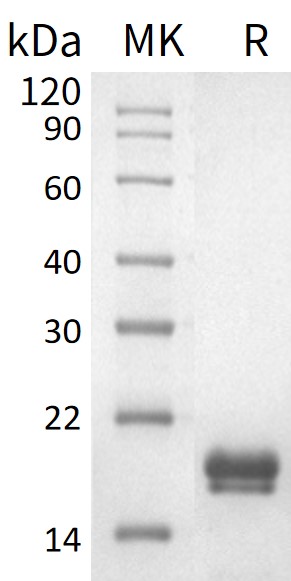 |
Greater than 95% as determined by reducing SDS-PAGE. |
靶点信息 Target Information
| 分子别名Alternative Names | Lithostathine-1-AlphaIslet Cells Regeneration FactorICRFIslet of Langerhans Regenerating ProteinREGPancreatic Stone ProteinPSPPancreatic Thread ProteinPTPRegenerating Islet-Derived Protein 1-AlphaREG-1-AlphaRegenerating Protein I AlphaREG1APSPSPSPS1REG |
|---|---|
| 功能Function | Might act as an inhibitor of spontaneous calcium carbonate precipitation. May be associated with neuronal sprouting in brain, and with brain and pancreas regeneration. |
| 亚细胞定位Subcellular Location | Secreted. |
| 数据库链接Databases |
基因功能参考文献50 条
- Serum levels of PCT and PSP are promising biomarkers for early diagnosis of pediatric acute osteomyelitis. PMID: 29091592 : 29091592
- PSP/reg levels are significantly up-regulated in diabetic kidney disease patients and might be related to renal injury PMID: 28418911 : 28418911
- Both univariate and multivariate analysis demonstrated that REG1A expression was associated with OS and PFS, and conducted harmful effects on nasopharyngeal carcinoma progression and survival. This study suggested that REG1A expression could serve as an independent adverse factor for survival in nasopharyngeal carcinoma. PMID: 29162157 : 29162157
- Reg I may play a role in the maintenance of mucosal barrier function by inducing tight junction proteins such as claudins 3 and 4. PMID: 27055226 : 27055226
- the prognostic value of procalcitonin (PCT), high-sensitivity C-reactive protein (hs-CRP), and pancreatic stone protein (PSP) in children with sepsis, was investigated. PMID: 28358790 : 28358790
- REG1alpha was overexpressed in bladder cancer tissues compared with adjacent normal samples. Downregulation of REG1alpha expression in urothelial bladder cancer can reduce tumor growth, migration, invasion and angiogenesis. PMID: 28209239 : 28209239
- REG-I is expressed in head and neck squamous cell carcinoma and is associated with a longer survival status. PMID: 27539087 : 27539087
- We have established a novel, three-protein biomarker panel that is able to detect patients with early-stage pancreatic cancer in urine specimens:LYVE-1, REG1A, and TFF1 were selected as candidate biomarkers PMID: 26240291 : 26240291
- post-operative serum PSP levels were significantly associated with the presence of infection in both the on-pump and off-pump setting. PMID: 25793700 : 25793700
- REG Ialpha protein may play a role in angiogenesis during progression of gastric cancer PMID: 25813126 : 25813126
- PSP/reg is significantly up-regulated in T2DM patients, and PSP/reg levels are related to the duration of diabetes. PMID: 25234740 : 25234740
- the expression of REG Ialpha and REG Ibeta may be upregulated in human beta cells under inflammatory conditions through the JAK/STAT pathway PMID: 25767811 : 25767811
- Collectively, these findings suggest that REG Ialpha activates c-Jun via the JNK and ERK pathway, thereby enhancing radiosensitivity PMID: 25656613 : 25656613
- Pancreactic stone protein levels were able to diagnose sepsis in patients admitted to intensive care units. PMID: 23531337 : 23531337
- PSP/reg levels were significantly higher in patients with a PELOD score of 12 or higher or in those with multiple organ dysfunction syndrome. Patients who died tended to have higher PSP/reg levels. PMID: 24594294 : 24594294
- REG Ialpha overexpression is a characteristic ofsessile serrated adenoma/polyps of the colon, which appears to reflect aberration of crypt cell compartmentalization. PMID: 24225137 : 24225137
- The effects of REG IA on AD and SCC cells were different in the in vitro study, and a correlation between REG IA expression and patient prognosis was noted in the in vivo study PMID: 24065141 : 24065141
- Reduced REG1A expression is associated with chemosensitivity in advanced thoracic esophageal squamous cell carcinoma. PMID: 23645481 : 23645481
- PSP/reg and CRP are differentially regulated by HNF1A and HNF4A in maturity-onset diabetes of the young PMID: 23803251 : 23803251
- Immunohistochemistry against known cell-type markers on serial sections has localised the expression of REGs to metaplastic Paneth cells (REG1A, REG1B and REG3A) and enteroendocrine cells (REG4), with a marked expansion of expression during inflammation. PMID: 23519454 : 23519454
- Reg family proteins stimulate pancreatic beta cell proliferation. PMID: 24055447 : 24055447
- Autoimmunity to REG Ialpha might play a role in the degeneration of minor salivary gland ductal epithelial cells in primary Sjogren's syndrome. PMID: 23701206 : 23701206
- Regenerating gene (REG) 1 alpha promotes pannus progression in patients with rheumatoid arthritis. PMID: 22203215 : 22203215
- REG 1A and REG 1B were upregulated during amebiasis and may function to protect the intestinal epithelium from parasite-induced apoptosis. PMID: 21586335 : 21586335
- Regenerating islet-derived 1alpha (Reg-1alpha) protein is new neuronal secreted factor that stimulates neurite outgrowth via exostosin Tumor-like 3 (EXTL3) receptor. PMID: 22158612 : 22158612
- Regenerating I protein was highly expressed in pure seminoma and in placental-like alkaline phosphatase-positive seminiferous tubules with in situ carcinoma. PMID: 21683984 : 21683984
- found a significant increase in REG Ialpha in the sera of celiac disease patients when compared with controls PMID: 21867979 : 21867979
- ELISA showed that the serum level of REG1alpha was significantly higher in patients with pancreatic cancer than it was in the normal controls. PMID: 21691750 : 21691750
- Raised serum Reg1alpha protein in type 1 and type 2 diabetes and anti-Reg1alpha antibodies in type 1 diabetes, are reported. PMID: 20972946 : 20972946
- Upregulation of REG Ialpha accelerates tumor progression in pancreatic cancer with diabetes. PMID: 20099282 : 20099282
- REG Ialpha protein may have a pathophysiological role as a biological mediator for immune cell-derived IL-22 in the ulcerative colitis mucosa. PMID: 20065946 : 20065946
- This finding suggests that REG I may act through IL-6 to exert effects on squamous esophageal cancer cell biology. PMID: 20056108 : 20056108
- did not find any association between abnormalities of either reg1 alpha or reg1 beta gene with type 1 diabetes mellitus, fibrocalculous pancreatopathy, or type 2 diabetes mellitus PMID: 11796176 : 11796176
- Characterization, structural analysis and putative functions. Review. PMID: 12369899 : 12369899
- REG expression was reported to be an independent predictor of overall gastric adenocarcinoma patient survival PMID: 15022278 : 15022278
- Reg I alpha protein may play a role in the development of gastric cancers PMID: 15166487 : 15166487
- Reg I was observed not only in pancreatic acinar cells but also in the duct-like cells and dilated duct cells. Reg I expression was linked to acinar cell dedifferentiation. PMID: 15211106 : 15211106
- Analysis of the protein in the bile of patients with pancreaticobiliary maljunction/ choledochal cysts PMID: 15628732 : 15628732
- REG Ialpha gene is inducible by cytokine stimulation and its gene product may function as a mitogenic and/or an antiapoptotic factor in the development of early gastric cancer. PMID: 15765400 : 15765400
- Damaged heart may be a target for Reg action, and Reg may protect against acute heart stress. PMID: 15778284 : 15778284
- Polymorphisms in reg1alpha gene, including the regulatory variants singly or in combination with the known mutations in SPINK1 and/or CTSB genes, are not associated with tropical calcific pancreatitis. PMID: 17990360 : 17990360
- REG Ialpha protein mediated the anti-apoptotic effects of STAT3 signaling in gastric cancer cells by enhancing Akt activation, Bad phosphorylation and Bcl-xL expression PMID: 18024479 : 18024479
- in patients treated with chemoradiotherapy, 8 of 23 REG I-positive patients showed complete responses to chemoradiotherapy; only 1 of 19 REG I-negatives did so; survival rate among REG I-positive patients was significantly better than REG I-negatives PMID: 18259819 : 18259819
- REG expression in Barrett's esophagus. Expression of REG Ialpha was more frequently observed in patients who showed squamous re-epithelialization of Barrett's esophagus at biopsy sites. PMID: 18289358 : 18289358
- REG1A is prognostic molecular marker associated with peritoneal carcinomatosis in colorectal cancer and is significantly raised in peritumoral normal tissue compared to mucosa from healthy individuals, suggesting a molecular field effect of secreted REG1A PMID: 18452172 : 18452172
- The expression of the REG1A gene is closely related to the infiltrating property of primary gastric carcinoma. PMID: 18630596 : 18630596
- Overexpression of REG1A is associated with breast cancer. PMID: 18781363 : 18781363
- REG1A enhances chemo- and radiosensitivity in squamous cell esophageal cancer cells. PMID: 19032369 : 19032369
- Expression of REG Ialpha but not REG IV was an independent predictor of poor outcome in patients with gastric cancer. PMID: 19329938 : 19329938
- The expression of REG gene is closely related to the carcinoma invasiveness of gastric neoplasms. PMID: 14508825 : 14508825
蛋白复溶体积计算器缓冲液体积 = 蛋白质量 ÷ 蛋白浓度
输入任意两项,第三项自动计算 |
蛋白浓度稀释计算器初浓度 × 初体积 = 终浓度 × 终体积
输入任意三项,第四项自动计算 |