


| 纯度Purity | Greater than 95% as determined by reducing SDS-PAGE. |
|---|---|
| 内毒素Endotoxin | Please contact with the lab for this information |
| 蛋白构建Protein Construction |
【His62-Pro628】序列区间
|
| Accession | P17405 |
| 表达宿主Expression Host | 293F |
| 种属Species | Homo sapiens (Human) |
| 预测分子量Predicted MW | 64.9 kDa |
| 制剂Formulation | Lyophilized from a 0.2 μm filtered solution of PBS, pH7.4, containing 0.01% SKL, 1mM DTT, 5% Trehalose and Proclin300. |
| 运输方式Shipping | The product is shipped with ice bag. Upon receipt, store it immediately at the temperature listed below. |
| 稳定性&储存Stability & Storage | 12 months at -20°C to -80°C in lyophilized state.6 months at -20°C to -80°C under sterile conditions after reconstitution.7-10 days at 2°C to 8°C under sterile conditions after reconstitution.Please minimize freeze-thaw cycles. |
| 复溶Reconstitution | Reconstitute in 10mM PBS (pH7.4) to a concentration of 0.1-1.0 mg/mL. Do not vortex. |
 |
Greater than 95% as determined by reducing SDS-PAGE. |
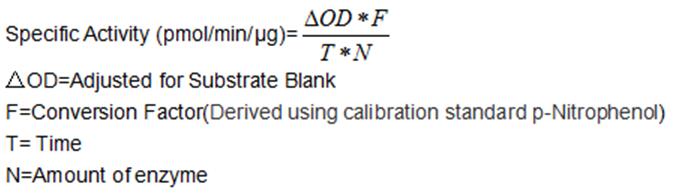 |
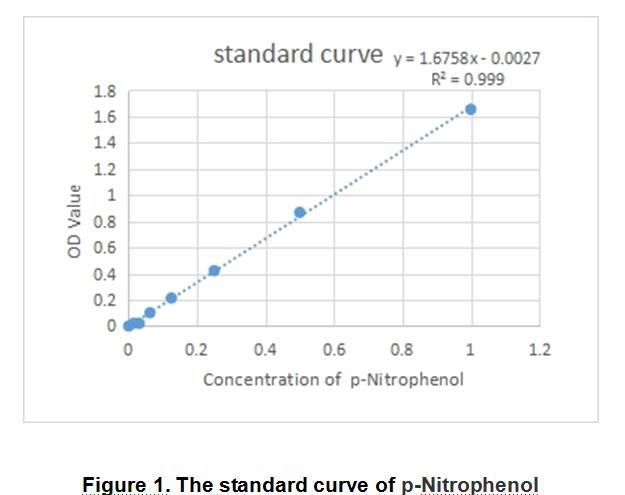
Sphingomyelin phosphodiesterase 1 (SMPD1), also known as acid sphingomyelinase (ASM), belongs to the sphingomyelin phosphodiesterase family. The protein Converts sphingomyelin to ceramide. ASM also has phospholipase C activities toward 1,2-diacylglycerolphosphocholine and 1,2-diacylglycerolphosphoglycerol. Thus, the recombinant human ASM activity was measured by its ability to hydrolyze 2-N-Hexadecanoylamino-4-nitrophenylphosphorylcholine (HDA-PC) to p-Nitrophenol. The reaction was performed in 50 mM MES, 0.5 µM ZnCl2, pH 7.5 ( Assay Buffer), initiated by addition 50 μL of various concentrations of ASM (diluted with Assay Buffer) to 50 µL of 1 mM Substrate HDA-PC ( 50 mM stock solution in methanol, diluted with Assay Buffer). Incubated at room temperature for 20 minutes in the dark, then read at a wavelength of 405 nm. One unit of enzyme activity is defined as the 1μg of enzyme required to convert 1pmol of HDA-PC to p-Nitrophenol in 1min at 37°C. The specific activity of recombinant human ASM is >1000 pmol/min/µg. |
 |
| 分子别名Alternative Names | SMPD1NPDSMaseaSMaseSphingomyelin Phosphodiesterase 1,Acid LysosomalSimply Sphingomyelinase |
|---|---|
| 背景介绍Background | Converts sphingomyelin to ceramide. Exists as two enzymatic forms that arise from alternative trafficking of a single protein precursor, one that is targeted to the endolysosomal compartment, whereas the other is released extracellularly. However, in response to various forms of stress, lysosomal exocytosis may represent a major source of the secretory form.; In the lysosomes, converts sphingomyelin to ceramide. Plays an important role in the export of cholesterol from the intraendolysosomal membranes. Also has phospholipase C activities toward 1,2-diacylglycerolphosphocholine and 1,2-diacylglycerolphosphoglycerol. Modulates stress-induced apoptosis through the production of ceramide.; When secreted, modulates cell signaling with its ability to reorganize the plasma membrane by converting sphingomyelin to ceramide. Secreted form is increased in response to stress and inflammatory mediators such as IL1B, IFNG or TNF as well as upon infection with bacteria and viruses. Produces the release of ceramide in the outer leaflet of the plasma membrane playing a central role in host defense. Ceramide reorganizes these rafts into larger signaling platforms that are required to internalize P. aeruginosa, induce apoptosis and regulate the cytokine response in infected cells. In wounded cells, the lysosomal form is released extracellularly in the presence of Ca(2+) and promotes endocytosis and plasma membrane repair.; Lacks residues that bind the cofactor Zn(2+) and has no enzyme activity.; Lacks residues that bind the cofactor Zn(2+) and has no enzyme activity.; (Microbial infection) Secretion is activated by bacteria such as P. aeruginos, N. gonorrhoeae and others, this activation results in the release of ceramide in the outer leaflet of the plasma membrane which facilitates the infection.; (Microbial infection) Secretion is activated by human coronaviruses SARS-CoV and SARS-CoV-2 as well as Zaire ebolavirus, this activation results in the release of ceramide in the outer leaflet of the plasma membrane which facilitates the infection. |
| 功能Function | Converts sphingomyelin to ceramide. Exists as two enzymatic forms that arise from alternative trafficking of a single protein precursor, one that is targeted to the endolysosomal compartment, whereas the other is released extracellularly. However, in response to various forms of stress, lysosomal exocytosis may represent a major source of the secretory form.; In the lysosomes, converts sphingomyelin to ceramide. Plays an important role in the export of cholesterol from the intraendolysosomal membranes. Also has phospholipase C activities toward 1,2-diacylglycerolphosphocholine and 1,2-diacylglycerolphosphoglycerol. Modulates stress-induced apoptosis through the production of ceramide.; When secreted, modulates cell signaling with its ability to reorganize the plasma membrane by converting sphingomyelin to ceramide. Secreted form is increased in response to stress and inflammatory mediators such as IL1B, IFNG or TNF as well as upon infection with bacteria and viruses. Produces the release of ceramide in the outer leaflet of the plasma membrane playing a central role in host defense. Ceramide reorganizes these rafts into larger signaling platforms that are required to internalize P. aeruginosa, induce apoptosis and regulate the cytokine response in infected cells. In wounded cells, the lysosomal form is released extracellularly in the presence of Ca(2+) and promotes endocytosis and plasma membrane repair.; Lacks residues that bind the cofactor Zn(2+) and has no enzyme activity.; Lacks residues that bind the cofactor Zn(2+) and has no enzyme activity.; (Microbial infection) Secretion is activated by bacteria such as P. aeruginos, N. gonorrhoeae and others, this activation results in the release of ceramide in the outer leaflet of the plasma membrane which facilitates the infection.; (Microbial infection) Secretion is activated by human coronaviruses SARS-CoV and SARS-CoV-2 as well as Zaire ebolavirus, this activation results in the release of ceramide in the outer leaflet of the plasma membrane which facilitates the infection. |
| 亚细胞定位Subcellular Location | Lysosome. Lipid droplet. Secreted. |
| 数据库链接Databases |
基因功能参考文献50 条
- The novel p.P226Q mutation and p.P533L mutation of SMPD1 are associated with Parkinson's disease. PMID: 29896723 : 29896723
- the human ASM holoenzyme and product bound structures encompassing all of the functional domains, are presented. PMID: 27725636 : 27725636
- This study sheds light on the molecular mechanism of ASMase function. PMID: 27435900 : 27435900
- The results suggest an association of Acid sphingomyelinase activation with Respiratory Syncytial Virus infection, a cause for common acute illness. PMID: 29238000 : 29238000
- This study identified association between Leu-Ala (Val) repeat variants in SMPD1 and Chinese Han patients with sporadic Parkinson's disease. PMID: 27814975 : 27814975
- Parkinson's disease is associated with mutations in SMPD1 gene in Ashkenazi Jews. PMID: 27449028 : 27449028
- Through genetic analysis it was determined that genetic variants in SMPD1 increase the risk of Parkinson's Disease in the Chinese Han population. PMID: 26377108 : 26377108
- Enzyme activities (acid alpha-glucosidase (GAA), galactocerebrosidase (GALC), glucocerebrosidase (GBA), alpha-galactosidase A (GLA), alpha-iduronidase (IDUA) and sphingomyeline phosphodiesterase-1 (SMPD-1)) were measured on ~43,000 de-identified dried blood spot (DBS) punches, and screen positive samples were submitted for DNA sequencing to obtain genotype confirmation of disease risk PMID: 27238910 : 27238910
- This study shows that the ASM alternative splicing pattern could be a biological target with diagnostic relevance and could serve as a novel biomarker for Major depressive disorder PMID: 27866044 : 27866044
- stress-induced activation of p38 MAPK and apoptosis in endothelial cells and established the link between the acid sphingomyelinase/ceramide and p38 MAPK pathways. PMID: 28179144 : 28179144
- Elevated acid sphingomyelinase (ASM) activity in the lung tumor environment and blood serum of patients with non-small cell lung cancer (NSCLC). PMID: 28883000 : 28883000
- this is the largest study on mutation analysis of patients with ASM-deficient Niemann-Pick disease reported in literature and also the first study on the SMPD1 gene mutation spectrum in India. PMID: 27338287 : 27338287
- ASM and ceramides, together with STX6 and cholesterol, constitute a new regulatory mechanism for the exit of Met from the Golgi during its biosynthetic route. PMID: 27802163 : 27802163
- the p.Ala359Asp mutation causes structural alterations in the hydrophobic environment where ASM is located, decreasing its enzymatic activity PMID: 27659707 : 27659707
- Airway cells with lower SMPD1 activity increases neutrophil chemotaxis towards them. PMID: 27865842 : 27865842
- The results identify acid sphingomyelinase as a novel target of Lycium Chinense berries to decrease saturated/unsaturated fatty acid sphingomyelin ratio, known to be useful for cell health. Consistent with these data, the berries regulate specifically gene expression to protect cells from apoptosis. PMID: 27756324 : 27756324
- ASMase mediated the 50-Hz MF-induced EGFR clustering via ceramide which was produced from hydrolyzation on lipid rafts PMID: 26915736 : 26915736
- acid sphingomyelinase-1 PMID: 27352097 : 27352097
- ASM is a negative regulator of regulatory T Cell development. PMID: 27512981 : 27512981
- We report on an infant with a new frameshift mutation (c.575dupG) of the SMPD1 gene. PMID: 26766671 : 26766671
- Seven novel mutations (c.518-519insT, c.562_563insC, c.792Gdel, c.949G>A, c.1487_1499delACCGTGTGTACCA, c.1495T>C and c.1670T>C) of the SMPD1 gene were identified in four patients. Only one fetus had two mutations of the SMPD1 gene of amniocytes PMID: 26851525 : 26851525
- although ebeta,5alpha,6beta-triol is more specific than 7-KC, it has been found to be significantly elevated in patients with Niemann-Pick type A, a lysosomal storage disorder caused by mutations in the SMPD1 gene PMID: 26790753 : 26790753
- This work provides the first evidence of significantly elevated circulating secretory sphyngomyelinase activity in the first trimester of pregnancy in women who go on to develop preeclampsia. PMID: 26756094 : 26756094
- A comprehensive updated review of already reported and newly identified SMPD1 variants of Niemann-Pick Types A and B disease has been presented. (Review) PMID: 26499107 : 26499107
- a conserved haplotype and shared 280 Kb region around the SMPD1 gene was observed in the patients analyzed, indicating that the variant originated from a common ancestor PMID: 25920558 : 25920558
- ASM activation may be involved in the pathophysiology of Kawasaki disease PMID: 26447086 : 26447086
- These results indicate that increased EGR1/3 and ASMase expression play an important role in cellular ceramide increase by RSV treatment. PMID: 26809095 : 26809095
- The results of this study suggested that disruptive mutations in SMPD1 constitute a risk factor for parkindon disease. PMID: 26169695 : 26169695
- This is the first evidence that supports the possibility that sphingolipid metabolism is affected via the induction of ASMase by the Nrf2 pathway. PMID: 25762726 : 25762726
- ASM has a pivotal role in adaptive immune T-cell responses. PMID: 26203857 : 26203857
- Patterns of alternatively spliced SMPD1 transcripts are significantly different in patients with systemic inflammatory response syndrome and severe sepsis/septic shock compared to control subjects allowing discrimination of respective disease entity. PMID: 25898364 : 25898364
- The mechanisms by which pyocyanin induces the release of mitochondrial ROS and by which ROS induce neutrophil death via mitochondrial acid sphingomyelinase was identified. PMID: 25686490 : 25686490
- Results show four novel mutations in SMPD1 in Iranian patients with type A or B Niemann-Pick disease extending the genotypic spectrum of the disease. PMID: 25811928 : 25811928
- The relationship between autophagy and A-SMase. [Review] PMID: 25666706 : 25666706
- Data suggest ASM (acid sphingomyelinase) activity is regulated by membrane lipids and facilitates cholesterol transfer by NPC2 (Niemann Pick protein type C2); hydrolysis of sphingomyelin by ASM may be crucial for endosomal lipid degradation/sorting. PMID: 25339683 : 25339683
- Data suggest invasiveness of Neisseria meningitidis depends on activation of SMPD1 and up-regulation of ceramide release to form ceramide-enriched platforms in cell membrane of endothelium of brain microvessels upon attachment of N. meningitidis. PMID: 24945304 : 24945304
- L-ASM activity was significantly lower in subjects homozygous for the minor A allele but not different between allergic and non-allergic subjects PMID: 24977483 : 24977483
- results provide the mechanism for dysferlin-mediated repair of skeletal muscle sarcolemma and identify ASM as a potential therapy for dysferlinopathy PMID: 24967968 : 24967968
- These results reveal a novel mechanism of ASM pathogenesis in Alzheimer's disease. PMID: 25049335 : 25049335
- The lysosomal enzyme coding genes SMPD1 which are associated with a 9-fold increased risk of Parkinson disease. PMID: 24262184 : 24262184
- seven novel SMPD1 mutations and new inside into genotype/phenotype correlations in Niemann-Pick disease PMID: 23252888 : 23252888
- Serum acid sphingomyelinase is upregulated in chronic hepatitis C infection and non-alcoholic fatty liver disease. PMID: 24769340 : 24769340
- liver samples from patients with alcoholic hepatitis exhibited increased expression of ASMase, StARD1, and ER stress markers PMID: 23707365 : 23707365
- Rare SMPD1 variant (p.R591C) increases the risk of Parkinson disease. PMID: 23871123 : 23871123
- Mutational analysis demonstrated the siblings are compound heterozygotes (V112M and H554Y). PMID: 22367733 : 22367733
- the spectrum of SMPD1 gene mutations in Turkish Niemann-Pick disease patients PMID: 23618813 : 23618813
- Role of the acid sphingomyelinase (Asm)-ceramide system as a target for antidepressants. PMID: 23770692 : 23770692
- Chinese population may have a comparably high incidence of sphingomyelinase-deficient Niemann-Pick disease type A. This study has identified some novel genotype and phenotype correlations in this rare and devastating disorder PMID: 23356216 : 23356216
- The SMPD1 p.L302P mutation is a novel risk factor for Parkinson disease PMID: 23535491 : 23535491
- Hydrogen peroxide, a primary form of reactive oxygen species in mammalian cells, induces very rapid translocation of ASM and formation of ceramide-enriched membrane platforms in the plasma membrane of Jurkat T cells. PMID: 22890197 : 22890197
蛋白复溶体积计算器缓冲液体积 = 蛋白质量 ÷ 蛋白浓度
输入任意两项,第三项自动计算 |
蛋白浓度稀释计算器初浓度 × 初体积 = 终浓度 × 终体积
输入任意三项,第四项自动计算 |



