Recombinant Human CXCL4 (C-6His)
Alternative NamesPlatelet Factor 4; PF-4; C-X-C Motif Chemokine 4; Iroplact; Oncostatin-A; PF4; CXCL4; SCYB4
规格参数 Specifications
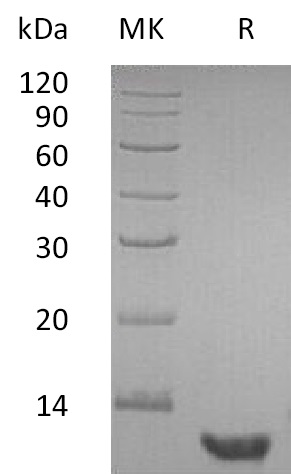
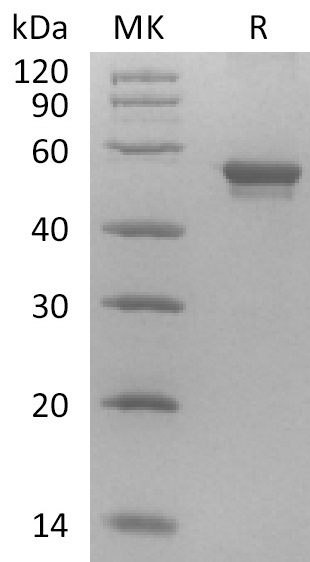
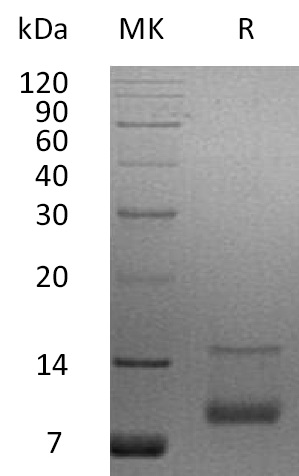
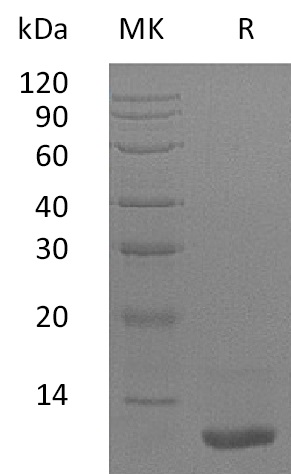
| 纯度Purity | Greater than 95% as determined by reducing SDS-PAGE |
|---|---|
| 内毒素Endotoxin | <1 EU/µg as determined by LAL test. |
| 蛋白构建Protein Construction |
【Ile4-Thr4&Glu32-Ser101】序列区间-6HisC 端标签
|
| Accession | P02776 |
| 表达宿主Expression Host | HEK293 |
| 种属Species | Human |
| 预测分子量Predicted MW | 8.8 kDa |
| 制剂Formulation | Lyophilized from a 0.2 μm filtered solution of 20mM PB, 150mM NaCl, 5% Trehalose, 5% Mannitol, 1mM EDTA, 0.02% Tween 80, pH6.0. |
| 运输方式Shipping | The product is shipped with ice bag. Upon receipt, store it immediately at the temperature listed below. |
| 稳定性&储存Stability & Storage | 12 months at -20°C to -80°C in lyophilized state.6 months at -20°C to -80°C under sterile conditions after reconstitution.7-10 days at 2°C to 8°C under sterile conditions after reconstitution.Please minimize freeze-thaw cycles. |
| 复溶Reconstitution | Always centrifuge tubes before opening. Do not mix by vortex or pipetting. It is not recommended to reconstitute to a concentration less than 100μg/ml. Dissolve the lyophilized protein in distilled water. Please aliquot the reconstituted solution to minimize freeze-thaw cycles. |
!
本司产品仅用于科研,不用于临床诊断和治疗。
产品图片 Product Images点击图片可查看原图
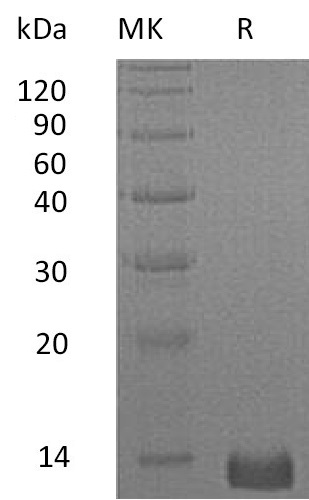 |
Greater than 95% as determined by reducing SDS-PAGE. |
靶点信息 Target Information
| 分子别名Alternative Names | Platelet Factor 4PF-4C-X-C Motif Chemokine 4IroplactOncostatin-APF4CXCL4SCYB4 |
|---|---|
| 功能Function | Released during platelet aggregation. Neutralizes the anticoagulant effect of heparin because it binds more strongly to heparin than to the chondroitin-4-sulfate chains of the carrier molecule. Chemotactic for neutrophils and monocytes. Inhibits endothelial cell proliferation, the short form is a more potent inhibitor than the longer form. |
| 亚细胞定位Subcellular Location | Secreted. |
| 数据库链接Databases |
基因功能参考文献50 条
- CXCL4 boosts pro-inflammatory cytokine production especially IL-17 by CD4(+) T cells, either by acting directly or indirectly via myeloid antigen presenting cells, implicating a role for CXCL4 in psoriatic arthritis pathology. PMID: 29193036 : 29193036
- The data show that antibodies magnify immune responses induced in PBMCs by PF4 alone or in complex with heparin or LMWH. Authors propose that following induction of HIT antibodies by heparin-PF4 complexes, binding of the antibodies to PF4 is sufficient to induce a local pro-inflammatory response which may play a role in the progression of HIT. PMID: 28968537 : 28968537
- Report anti-PF4/H monoclonal antibody with a human Fc fragment, which induces similar cellular activation as heparin-induced thrombocytopenia antibodies. PMID: 28771917 : 28771917
- PF4 was produced by Ly6G+CD11b+ immature myeloid cells in the early stage premetastatic lungs, and decreased during metastatic progression. PMID: 27223426 : 27223426
- The CXCL4 monomer acts as the minimal active unit for interacting with CXCR3 N-Terminal Sulfated Peptide, and sulfation of N-terminal tyrosine residues on the receptor is important for binding. PMID: 28945356 : 28945356
- These findings support PF4 as a cancer-enhancing endocrine signal that controls discrete aspects of bone marrow hematopoiesis and tumor microenvironment. PMID: 27829148 : 27829148
- data support that increased levels of circulating CXCL4 may contribute to immune dysregulation through the modulation of dendritic cell differentiation PMID: 28515281 : 28515281
- Endometrial CXCL4 mRNA concentrations were significantly increased during menstruation. In women with heavy menstrual bleeding, CXCL4 was reduced in endothelial cells during the menstrual phase compared with women with normal menstrual bleeding. These data implicate CXCL4 in endometrial repair after menses. PMID: 28323919 : 28323919
- Two haplotype blocks, one upstream to the coding region of UGT2A1 (rs146712414, P = 9.1 x 10(-5); odds ratio [OR], 1.34; 95% confidence interval [CI], 1.16-1.56) and one downstream of the genes PF4/PPBP/CXCL5 (rs1595009, P = 1.3 x 10(-4); OR, 1.32; 95% CI, 1.15-1.52), were associated with AgP. PMID: 28467728 : 28467728
- These data demonstrate that the CXCR2 network and CXCL4 play a role in the maintenance of normal HSC/HPC cell fates, including survival and self-renewal. PMID: 27222476 : 27222476
- The major aim of this review article was to evaluate the role of CXCL4 in hematological malignancies, promotion of HSC quiescence as well as BM niche cells. PMID: 26803701 : 26803701
- binding of PF4 to perlecan was found to inhibit both FGF2 signaling and platelet activation PMID: 28115521 : 28115521
- CXCL4 plays an important role in pancreatic inflammation PMID: 27183218 : 27183218
- The hitherto unknown association of increased serum CXCL4 with features of microvascular impairment in primary Sjogren's syndrome, along with the negative association with features of lymphocytic response suggest clarifying the possible implication of this chemokine in primary Sjogren's syndrome pathogenesis in larger studies. PMID: 27562035 : 27562035
- serum concentration of CXCL4 was significantly increased in patients with Chronic Liver Allograft Dysfunction (CLAD); CXCL4 mRNA was significantly increased in subjects with CLAD versus individuals without CLAD PMID: 28053995 : 28053995
- Plasma levels of CXCL4 are associated with tumour vascularity. PMID: 27098116 : 27098116
- Data suggest that, in patients with hypothyroid autoimmune thyroiditis, PF4/CXCL4 serum levels are significantly lower in those with subclinical hypothyroidism than in euthyroid control subjects. PMID: 26142741 : 26142741
- Expression of CXCL4 and aquaporin 3 and 10 mRNAs in middle ear effusion is associated with the pathophysiology of otitis media with effusion. PMID: 26810286 : 26810286
- PF4 changed its structure upon binding to polyP in a similar way as seen in PF4/heparin complexes. PF4/polyP complexes exposed neoepitopes to which human anti-PF4/heparin antibodies bound. PMID: 26225544 : 26225544
- PF4 has a complex intramedullary life cycle with important implications in megakaryopoiesis and hematopoietic stem cell replication not seen with other tested alpha granule proteins. PMID: 26256688 : 26256688
- A subset of heparin-treated patients produce subthreshold levels of platelet-activating anti-PF4/heparin antibodies that do not cause heparin-induced thrombocytopenia. PMID: 26291604 : 26291604
- Synovial Cxcl4 mRNA and protein were increased in early rheumatoid arthritis compared to uninflamed controls and resolving arthritis. PMID: 25858640 : 25858640
- Results found that CXCL4 plasma levels did not differ between patients with and without coronary artery disease. Also, no association between CXCL4 levels and plaque characteristics including plaque volume, calcium score, or vascular remodeling. PMID: 26524462 : 26524462
- Heparin enhances antigen uptake and activation of the initial steps in the cellular immune response to PF4-containing complexes. PMID: 25960020 : 25960020
- PF4-heparin complexes can elicit a TLR4-mediated response, suggesting that these complexes can mimic a pathogen-associated molecular pattern, and supporting the suggestion that the HIT immune response represents a misdirected host defense mechanism. PMID: 25604035 : 25604035
- CXCL4 insufficiency may be involved in specific inflammatory microenvironment of ovarian cancers arising in endometriosis. PMID: 22555803 : 22555803
- effective for prediction of the risk of thrombosis in hemodialysis patients PMID: 24665827 : 24665827
- although all HIT antibodies recognize PF4 in a complex with heparin, only a subset of these antibodies recognize more subtle epitopes induced in PF4 when it binds to CS, the major platelet glycosaminoglycan PMID: 25342714 : 25342714
- The interaction of PF4 with unfractionated heparin (UFH), its 16-, 8-, and 6-mer subfractions, low-molecular-weight heparin (LMWH), and the pentasaccharide fondaparinux, was characterized. PMID: 25150299 : 25150299
- CXCL4 and CXCL4L1 activated p38 MAPK, as well as Src kinase within 30 and 5 min, respectively. Extracellular signal-regulated kinase (ERK) phosphorylation occurred in activated lymphocytes. PMID: 24469069 : 24469069
- eutopic endometrial stromal cells from deep infiltrating endometriosis patients are attracted into the peritoneal cavity through the interaction between CXCR4 expressed on their membrane and CXCL12 produced in the peritoneal cavity. PMID: 24534089 : 24534089
- Data suggest that healthy adult stem cells exposed to vitreous/aqueous humors of subjects with proliferative diabetic retinopathy results in increased expression of CXCL4, serpin F1, and endothelin-1 (aqueous only). PMID: 25159325 : 25159325
- Platelet factor 4 exhibits antimicrobial activity against Plasmodium falciparum. PMID: 23245326 : 23245326
- Plasma VEGF was significantly reduced in low birth weight (LBW) neonates while that of sVEGFR-1 and PF4 were significantly higher. VEGF/sVEGF/PF4 pathway seems to be involved in the endothelial progenitor cell dysfunction in LBW neonates. PMID: 23701307 : 23701307
- Platelet factor 4 has significant crosstalk with vascular endothelial growth factor by modulating cell migration and signal transduction pathways. PMID: 24023389 : 24023389
- Baseline PF4 and beta-TG plasma levels were found remarkably higher and no significant reduction was observed at the endpoint in patients with residual major depression PMID: 23611535 : 23611535
- RUNX1, but not its mutants, strongly and synergistically activates PF4 expression along with ETS family proteins PMID: 23848403 : 23848403
- certain genotypes of ACP1 associated with high phosphatase activity may increase the T-cell response to PF4-heparin complexes, with higher levels of circulating antibodies PMID: 23621699 : 23621699
- Histones regulate activated protein C formation in a manner similar to PF4 and suggest heparinoids may be benificial in sepsis. PMID: 24177324 : 24177324
- physical relationship between the PF4-positive thrombi and the heparin-coated surface suggests that onset of HIT II could be influenced by the immobilized heparin coating PMID: 23769097 : 23769097
- Distinct specificity and single-molecule kinetics characterize the interaction of pathogenic and non-pathogenic antibodies against platelet factor 4-heparin complexes with platelet factor 4. PMID: 24097975 : 24097975
- Release of CXCL4 by activated platelets inhibits HIV-1 infection of adjacent T cells at the stage of virus entry. PMID: 23634812 : 23634812
- Anti-PF4/heparin IgG antibodies generated after coronary artery bypass grafting are associated with early venous graft occlusion. PMID: 23216710 : 23216710
- Report ability of enoxaparin-derived oligosaccharides to induce platelet activation and exposure of platelet-factor 4 epitopes recognized by antibodies developed in heparin induced thrombocytopenia. PMID: 22235911 : 22235911
- This study aimed at examining the presence and role of chemokines (angiogenic CCL2/MCP-1 and angiostatic CXCL4/PF-4, CXCL9/Mig, CXCL10/IP-10) in proliferative diabetic retinopathy. PMID: 23352833 : 23352833
- This study highlights the importance of PF4 variants in the regulation of platelet activation (PF4) and systemic inflammation (tumor necrosis factor-alpha) serum biomarkers. PMID: 22763266 : 22763266
- platelet molecule platelet factor 4 (PF4 or CXCL4) and the erythrocyte Duffy-antigen receptor (Fy) are necessary for platelet-mediated killing of Plasmodium falciparum parasites. PMID: 23224555 : 23224555
- The present review describes the role of CXCL4-PF4 in cancer, the immunobiology, clinical presentation and diagnosis of HIT, and the specific problems faced in cancer patients. PMID: 22682144 : 22682144
- Differences in the properties of anti-PF4 antibodies that cause thrombocytopenia not revealed by ELISA that correlate with oligomerization of PF4 and sustained high-avidity interactions that may simulate transient antibody-antigen interactions in vivo. PMID: 22577175 : 22577175
- Examined the prognostic values of SARS-associated proteome, and deciphered the identities of those with prognostic values.The associations of decreased serum PF4 and increased serum beta-TG levels with poor prognosis were confirmed by Western blot. PMID: 22740477 : 22740477
蛋白复溶体积计算器缓冲液体积 = 蛋白质量 ÷ 蛋白浓度
输入任意两项,第三项自动计算 |
蛋白浓度稀释计算器初浓度 × 初体积 = 终浓度 × 终体积
输入任意三项,第四项自动计算 |