


| 纯度Purity | Greater than 97% as determined by reducing SDS-PAGE. |
|---|---|
| 内毒素Endotoxin | Please contact with the lab for this information |
| 蛋白构建Protein Construction |
【Ala25-Lys96】序列区间
|
| Accession | P12850 |
| 表达宿主Expression Host | E.coli |
| 种属Species | Mus musculus (Mouse) |
| 预测分子量Predicted MW | 11.5 kDa |
| 制剂Formulation | Lyophilized from a 0.2 μm filtered solution of PBS, pH7.4, containing 0.01% SKL, 1mM DTT, 5% Trehalose and Proclin300. |
| 运输方式Shipping | The product is shipped with ice bag. Upon receipt, store it immediately at the temperature listed below. |
| 稳定性&储存Stability & Storage | 12 months at -20°C to -80°C in lyophilized state.6 months at -20°C to -80°C under sterile conditions after reconstitution.7-10 days at 2°C to 8°C under sterile conditions after reconstitution.Please minimize freeze-thaw cycles. |
| 复溶Reconstitution | Reconstitute in 10mM PBS (pH7.4) to a concentration of 0.1-1.0 mg/mL. Do not vortex. |
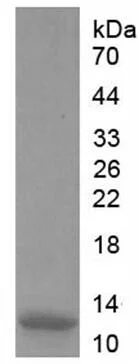 |
Greater than 97% as determined by reducing SDS-PAGE. |
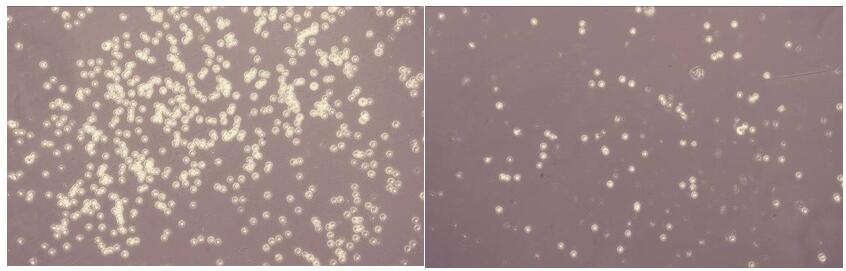 |
Neutrophil Activating Protein 3 (NAP3) ,also known as chemokine (C-X-C motif) ligand 1 (CXCL1) is a small cytokine belonging to the CXC chemokine family. NAP3 plays a role in spinal cord development by inhibiting the migration of oligodendrocyte precursors and is involved in the processes of angiogenesis, arteriogenesis, inflammation, wound healing, and tumorigenesis. Thus, chemotaxis assay used 24-well microchemotaxis system was undertaken to detect the chemotactic effect of NAP3 on the human monocytic cell line THP-1. Briefly, THP-1 cells were seeded into the upper chambers (100uL cell suspension, 5×10⁵ cells/ml in RPMI 1640 with FBS free) and recombinant human NAP3 (0.01ng/mL, 0.1ng/mL, 1ng/mL, 10ng/mL, 100ng/mL, 1000ng/mL diluted separately in serum free RPMI 1640) was added in lower chamber with a polycarbonate filter (8um pore size) used to separate the two compartments. After incubation at 37℃ with 5% CO2 for 1h, the filter was removed, then cells in low chamber were observed by inverted microscope at low magnification (×100) and the number of migrated cells were counted at high magnification (×200) randomly (five fields for each filter). Result shows recombinant human NAP3 is able to induce migration of THP-1 cells. The migrated THP-1 cells in low chamber at low magnification(×100) were shown in Figure 1. Five fields of each chamber were randomly chosen, and the migrated cells were counted at high magnification(×200). Statistical results were shown in Figure 2. The optimum chemotaxis of NAP3 occurs at 0.1~1ng/mL. |
| 分子别名Alternative Names | NAP3GRO1GROaGRO-AMGSA-ANAP3SCYB1Chemokine C-X-C-Motif Ligand 1Melanoma Growth Stimulating Activity AlphaFibroblast Secretory Protein |
|---|---|
| 背景介绍Background | Has chemotactic activity for neutrophils. Contributes to neutrophil activation during inflammation. Hematoregulatory chemokine, which, in vitro, suppresses hematopoietic progenitor cell proliferation. KC(5-72) shows a highly enhanced hematopoietic activity. |
| 功能Function | Has chemotactic activity for neutrophils. Contributes to neutrophil activation during inflammation. Hematoregulatory chemokine, which, in vitro, suppresses hematopoietic progenitor cell proliferation. KC(5-72) shows a highly enhanced hematopoietic activity. |
| 亚细胞定位Subcellular Location | Secreted. |
| 数据库链接Databases |
基因功能参考文献50 条
- Data suggest that CD4+ T lymphocytes and microglial CD40 mediate their pro-nociceptive effects in part by promoting selected chemokine responses, and more importantly, CXCL1 can play an anti-nociceptive role in peripheral nerve injury-induced neuropathic pain, which is possibly mediated by infiltrating neutrophils. PMID: 29309879 : 29309879
- Adipose stromal cells recruitment to tumours, driven by CXCL1 and CXCL8, promotes prostate cancer progression. PMID: 27241286 : 27241286
- The results demonstrate that C57BL/6J mice have a functional defect in NLRP12, impaired CXCL1 production, and that macrophages require NLRP12 expression for effective recruitment of neutrophils to inflammatory sites. PMID: 27779193 : 27779193
- GAG interactions and receptor activity of CXCL1 monomers and dimers are fine-tuned to regulate neutrophil trafficking for successful resolution of tissue injury. PMID: 27625115 : 27625115
- a paracrine role for Hippo-mediated secretion of CXCL1 and CXCL2 in the production of anti-microbial peptides (beta-defensins), iNOS, NOX2 and pro-inflammatory molecules during mycobacterial infection of the host, is reported. PMID: 27883091 : 27883091
- this study demonstrates that in vivo blocking of CXCL1 and CXCL2 can significantly reduce the Mycobacterium tuberculosis-induced bioactive IL-1beta production PMID: 28739876 : 28739876
- CXCL1 contributed to rapid neutrophil recruitment during Bacillus cereus endophthalmitis. In CXCL1-knockout mice, retinal function was greater and neutrophil influx was less than in control mice, confirming its role in ocular inflammation. PMID: 27286792 : 27286792
- Interferon-gamma (IFN-gamma) up-regulated interleukin 6 (IL-6) and CXCL1 chemokine (CXCL1) production of bone marrow mesenchymal stem cells (mBM-MSC). PMID: 28791835 : 28791835
- Our work deciphers the mCXCL1-mTORC1 pathway as crucial in liver cancer stem cell maintenance PMID: 27488521 : 27488521
- MMP7 shedding of syndecan-1/CXCL1 complexes functions as a checkpoint that restricts neutrophil activation at sites of epithelial injury. PMID: 26934670 : 26934670
- Data show that loss of loss of matrix metalloproteinase-3 (MMP-3) repressed the upregulation of the chemokines monocyte chemoattractant protein (MCP)-1 and (C-X-C motif) ligand 1 (CXCL1). PMID: 27809288 : 27809288
- The novel findings reveal the critical role of NLRP12-IL-17A-CXCL1 axis in host defense by modulating neutrophil recruitment against Klebsiella pneumoniae. PMID: 26349659 : 26349659
- Nlrp12 deficiency caused increased neutrophil migration towards the chemokine CXCL1 and the neutrophil parasite Leishmania major, revealing NLRP12 as a negative regulator of directed neutrophil migration under these conditions. PMID: 26514298 : 26514298
- Chemotactic activity of stellate cell-derived CXCL1 was assayed in vitro on neutrophils upon TLR4 activation. PMID: 27002851 : 27002851
- IL-17RA regulates CXL-1 and 5 production in the lungs during the adaptive response. PMID: 26871571 : 26871571
- Data suggest that CXCL1/IL-8, released from osteoclasts in an autoantibody-dependent manner, produces pain by activating sensory neurons. PMID: 26613766 : 26613766
- TGF-beta negatively regulates CXCL1 expression in CAFs through Smad2/3 binding to the promoter, and through suppression of HGF/c-Met autocrine signaling PMID: 26252654 : 26252654
- work shows parallel networks of necroptosis-induced CXCL1 and Mincle signalling that promote macrophage-induced adaptive immune suppression and thereby enable pancreatic ductal adenocarcinoma progression PMID: 27049944 : 27049944
- Repeated social defeat-induced VCAM-1 protein expression were localized to the vasculature of brain regions implicated in fear and anxiety responses. PMID: 25445193 : 25445193
- In a chronic-binge ethanol-feeding model, the hepatic TLR2 and TLR9-dependent MyD88-dependent pathway mediates CXCL1 production, resulting in the development of alcohol-mediated liver injury. PMID: 25930080 : 25930080
- IL-1 signaling plays a pivotal role in activating mucosal stromal cells to secrete CXCL1 which is essential for infiltration of IL-22-secreting neutrophils upon Citrobacter rodentium infection. PMID: 26034212 : 26034212
- Zfp30 is expressed in airway epithelia in the normal mouse lung and Zfp30 expression in vitro affects CXCL1 responses to an immune stimulus. PMID: 25114278 : 25114278
- Metoprolol also decreased serum levels of proinflammatory cytokines TNFalpha and CXCL1 and macrophage content in the plaques, showing that metoprolol has an anti-inflammatory effect. PMID: 25105129 : 25105129
- This study demonstrated the role of peripheral CXCL1/CXCR2 signaling in postoperative pain in the setting of prior morphine exposure. PMID: 24887006 : 24887006
- phagocytosis of refrigerator-stored RBCs in vivo induced increases in circulating monocyte chemoattractant protein-1 (MCP-1) and keratinocyte chemoattractant (KC) PMID: 25041478 : 25041478
- Neutrophil recruitment and the neutrophil cytokines, CXCL1/CXCL2, were suppressed in apo(a)transgenic mice in the abdominal aortic aneurysm model. PMID: 24650562 : 24650562
- These data identify a cytokine circuit that involves IL-1beta-induced production of CXCL1 and CXCL2 and leads the recruitment of neutrophils to streptococcal infection sites. PMID: 25114117 : 25114117
- Estrogen receptors alpha regulates CCL20/CXCL1 secretion in the female reproductive tract. PMID: 23025258 : 23025258
- These studies suggest that modulation of CXCL1 levels in tissues and blood could reduce bacterial burden in sepsis. PMID: 25172493 : 25172493
- Pharmacological inhibition of NAMPT activity mitigates inflammation in atherosclerotic plaques by reducing CXCL1-mediated activities on neutrophils. PMID: 24196571 : 24196571
- Data indicate that levels of toll-like receptors TLR4/4-stimulated chemokines CXCL1 and CXCL2 were selectively enhanced in stressed macrophages via receptor-interacting protein kinase 1 (RIPK1). PMID: 24920846 : 24920846
- findings demonstrated that CXCL1 and CXCL5 are increased in circulation with onset of T2D, are produced by islets under stress, and synergistically affect islet function, suggesting that these chemokines participate in pathogenesis of T2D. PMID: 24928936 : 24928936
- In vitro, neutrophils adherent to ICAM-1 or ICAM-2 rapidly released TNF in response to LTB4, C5a, and KC. PMID: 24913232 : 24913232
- Secretion of Cxcl1 (KC) cytokine is inhibited by electrical stimulation in early and late experimentally induced arthritic spleen. PMID: 23791889 : 23791889
- A sustained form of CXCL1 upregulation is demonstrated that can drive neuropathic pain in the spinal cord. PMID: 23831863 : 23831863
- the presence of CXCL1 is required for recurrent Herpetic stromal keratitis as evidenced by the lack of corneal disease in mice treated with anti-CXCL1 Ab. PMID: 24442436 : 24442436
- CXCL1 expressed by monocytes and CXCR2 on HBMEC is involved in monocytes migrating from blood to brain in AD patients PMID: 23967336 : 23967336
- BCG-triggered increase of lipid body biogenesis was inhibited by the PPARgamma antagonist GW9662, but not by the NF-kappaB inhibitor JSH-23. In contrast, KC/CXCL1 production was largely dependent on NF-kappaB but not on PPARgamma PMID: 24120921 : 24120921
- IL-17 and TNF-alpha synergistically mediate CXCL1 production by ATII cells after ischemia/reperfusion, via an NADPH oxidase-dependent mechanism. PMID: 24186876 : 24186876
- excessive CXCL1 expression in gp130-deficient endothelial cells augments neutrophil adhesion but hinders migration, most likely by disrupting chemotactic gradients PMID: 24081661 : 24081661
- KC, a potent neutrophil chemoattractant and an established angiogenic factor, failed to interfere in the post-infarction inflammatory response, in wound healing and scar formation after MI. PMID: 23598282 : 23598282
- Molecular basis of glycosaminoglycan heparin binding to the chemokine CXCL1 dimer. PMID: 23864653 : 23864653
- Overexpression and distinct localization of LCN2, CXCL1 and CXCL9 in the liver of fatty liver Shionogi mice suggest significant roles of these proteins in the pathogenesis of non-alcoholic steatohepatitis. PMID: 23875831 : 23875831
- At day 10, CIP treatment not only significantly reduced pro-inflammatory cytokine and chemokine concentrations, including interleukin-6 (IL-6) and KC, but it also enhanced IL-3 production compared to vehicle-treated controls. PMID: 23520506 : 23520506
- In severe S. aureus bacteraemia in mice, TNF-alpha, IL-1alpha, and KC are biomarkers predicting fatal outcome of infection. PMID: 23520553 : 23520553
- the model that mast cells, optimally positioned in close proximity to the vasculature, initiate an early phase of neutrophil recruitment by releasing the chemoattractants CXCL1/CXCL2. PMID: 23645836 : 23645836
- When expressed, CXCL1 is limited to small areas with faint staining and PCa progression does not rely on CXCL1 expression. PMID: 23334998 : 23334998
- MMP9 expressed by intestinal epithelial cells mediates inflammation in colitis with simultaneous increase in proinflammatory cytokine Kc. PMID: 23471340 : 23471340
- Early systemic release of IL-6 and keratinocyte-derived chemokine Cxcl1 may not necessarily predict an unfavorable outcome in this model of stroke. PMID: 22533966 : 22533966
- Intrahepatic CXCL1 & circulating CXCL1 were strongly induced shortly after islet infusion. Blockade of the CXCL1-CXCR1/2 axis in mice improved intrahepatic islet engraftment. The CXCR1/2-mediated pathway is a regulator of islet damage. PMID: 22996693 : 22996693
蛋白复溶体积计算器缓冲液体积 = 蛋白质量 ÷ 蛋白浓度
输入任意两项,第三项自动计算 |
蛋白浓度稀释计算器初浓度 × 初体积 = 终浓度 × 终体积
输入任意三项,第四项自动计算 |



