


| 纯度Purity | Greater than 90% as determined by reducing SDS-PAGE. |
|---|---|
| 内毒素Endotoxin | Please contact with the lab for this information |
| 蛋白构建Protein Construction |
【Pro344-Asp497】序列区间
|
| Accession | P08684 |
| 表达宿主Expression Host | E.coli |
| 种属Species | Homo sapiens (Human) |
| 预测分子量Predicted MW | 21.6 kDa |
| 制剂Formulation | Lyophilized from a 0.2 μm filtered solution of 20mM Tris, 150mM NaCl, pH8.0, containing 1mM EDTA, 1mM DTT, 0.01% SKL, 5% Trehalose and Proclin300. |
| 运输方式Shipping | The product is shipped with ice bag. Upon receipt, store it immediately at the temperature listed below. |
| 稳定性&储存Stability & Storage | 12 months at -20°C to -80°C in lyophilized state.6 months at -20°C to -80°C under sterile conditions after reconstitution.7-10 days at 2°C to 8°C under sterile conditions after reconstitution.Please minimize freeze-thaw cycles. |
| 复溶Reconstitution | Reconstitute in ddH₂O to a concentration of 0.1-0.2 mg/mL. Do not vortex. |
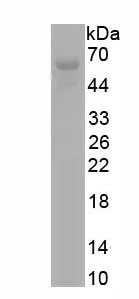 |
Greater than 90% as determined by reducing SDS-PAGE. |
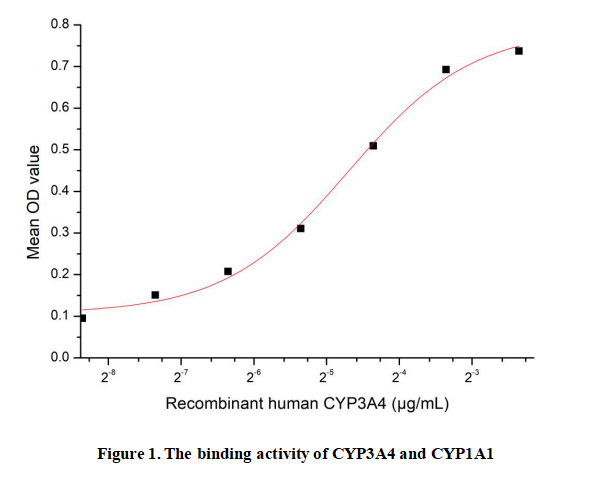 |
Cytochrome P450 3A4 (CYP3A4), a member of the cytochrome P450 superfamily of heme - containing enzymes, is predominantly expressed in the human liver and small intestine, serving as a key player in xenobiotic metabolism and endobiotic biotransformation. It catalyzes the oxidation of over 50% of clinically used drugs, including statins, immunosuppressants, and anticancer agents, by adding oxygen atoms to hydrophobic substrates, thereby facilitating their excretion. CYP3A4 expression and activity are highly variable among individuals due to genetic polymorphisms, environmental inducers (e.g., rifampicin, phenobarbital) and inhibitors (e.g., ketoconazole, grapefruit juice). Beyond drug metabolism, it participates in the breakdown of endogenous compounds such as steroids and bile acids, maintaining physiological homeostasis. Notably, CYP3A4 and CYP1A1, both phase I metabolic enzymes, exhibit potential functional binding to synergistically modulate the metabolism of shared substrates, with their interaction being a critical part of the hepatic metabolic network.To detect the activity of recombinant CYP3A4, a functional ELISA assay was performed to evaluate the interaction between recombinant human CYP3A4 and recombinant human CYP1A1.Briefly, biotin-linked CYP3A4 were diluted serially in PBS, with 0.01% BSA (pH 7.4). Duplicate samples of 100µl were then transferred to CYP1A1-coated microtiter wells and incubated for 1h at 37℃. Wells were washed with PBST 3 times and incubation with Streptavidin-HRP for 30min, then wells were aspirated and washed 5 times. With the addition of substrate solution, wells were incubated 15-25 minutes at 37℃. Finally, add 50µl stop solution to the wells and read at 450nm immediately. The binding activity of CYP3A4 and CYP1A1 was shown in Figure 1, the EC50 for this effect is 0.03849µg/mL.. |
| 分子别名Alternative Names | CYP3A3CYPIIIA41,8-cineole 2-exo-monooxygenaseAlbendazole sulfoxidaseNifedipine oxidaseQuinine 3-monooxygenaseTaurochenodeoxycholate 6-alpha-hydroxylase |
|---|---|
| 背景介绍Background | A cytochrome P450 monooxygenase involved in the metabolism of sterols, steroid hormones, retinoids and fatty acids. Mechanistically, uses molecular oxygen inserting one oxygen atom into a substrate, and reducing the second into a water molecule, with two electrons provided by NADPH via cytochrome P450 reductase (NADPH--hemoprotein reductase). Catalyzes the hydroxylation of carbon-hydrogen bonds. Exhibits high catalytic activity for the formation of hydroxyestrogens from estrone (E1) and 17beta-estradiol (E2), namely 2-hydroxy E1 and E2, as well as D-ring hydroxylated E1 and E2 at the C-16 position. Plays a role in the metabolism of androgens, particularly in oxidative deactivation of testosterone. Metabolizes testosterone to less biologically active 2beta- and 6beta-hydroxytestosterones. Contributes to the formation of hydroxycholesterols (oxysterols), particularly A-ring hydroxylated cholesterol at the C-4beta position, and side chain hydroxylated cholesterol at the C-25 position, likely contributing to cholesterol degradation and bile acid biosynthesis. Catalyzes bisallylic hydroxylation of polyunsaturated fatty acids (PUFA). Catalyzes the epoxidation of double bonds of PUFA with a preference for the last double bond. Metabolizes endocannabinoid arachidonoylethanolamide (anandamide) to 8,9-, 11,12-, and 14,15-epoxyeicosatrienoic acid ethanolamides (EpETrE-EAs), potentially modulating endocannabinoid system signaling. Plays a role in the metabolism of retinoids. Displays high catalytic activity for oxidation of all-trans-retinol to all-trans-retinal, a rate-limiting step for the biosynthesis of all-trans-retinoic acid (atRA). Further metabolizes atRA toward 4-hydroxyretinoate and may play a role in hepatic atRA clearance. Responsible for oxidative metabolism of xenobiotics. Acts as a 2-exo-monooxygenase for plant lipid 1,8-cineole (eucalyptol). Metabolizes the majority of the administered drugs. Catalyzes sulfoxidation of the anthelmintics albendazole and fenbendazole. Hydroxylates antimalarial drug quinine. Acts as a 1,4-cineole 2-exo-monooxygenase. Also involved in vitamin D catabolism and calcium homeostasis. Catalyzes the inactivation of the active hormone calcitriol (1-alpha,25-dihydroxyvitamin D(3)). |
| 功能Function | A cytochrome P450 monooxygenase involved in the metabolism of sterols, steroid hormones, retinoids and fatty acids. Mechanistically, uses molecular oxygen inserting one oxygen atom into a substrate, and reducing the second into a water molecule, with two electrons provided by NADPH via cytochrome P450 reductase (NADPH--hemoprotein reductase). Catalyzes the hydroxylation of carbon-hydrogen bonds. Exhibits high catalytic activity for the formation of hydroxyestrogens from estrone (E1) and 17beta-estradiol (E2), namely 2-hydroxy E1 and E2, as well as D-ring hydroxylated E1 and E2 at the C-16 position. Plays a role in the metabolism of androgens, particularly in oxidative deactivation of testosterone. Metabolizes testosterone to less biologically active 2beta- and 6beta-hydroxytestosterones. Contributes to the formation of hydroxycholesterols (oxysterols), particularly A-ring hydroxylated cholesterol at the C-4beta position, and side chain hydroxylated cholesterol at the C-25 position, likely contributing to cholesterol degradation and bile acid biosynthesis. Catalyzes bisallylic hydroxylation of polyunsaturated fatty acids (PUFA). Catalyzes the epoxidation of double bonds of PUFA with a preference for the last double bond. Metabolizes endocannabinoid arachidonoylethanolamide (anandamide) to 8,9-, 11,12-, and 14,15-epoxyeicosatrienoic acid ethanolamides (EpETrE-EAs), potentially modulating endocannabinoid system signaling. Plays a role in the metabolism of retinoids. Displays high catalytic activity for oxidation of all-trans-retinol to all-trans-retinal, a rate-limiting step for the biosynthesis of all-trans-retinoic acid (atRA). Further metabolizes atRA toward 4-hydroxyretinoate and may play a role in hepatic atRA clearance. Responsible for oxidative metabolism of xenobiotics. Acts as a 2-exo-monooxygenase for plant lipid 1,8-cineole (eucalyptol). Metabolizes the majority of the administered drugs. Catalyzes sulfoxidation of the anthelmintics albendazole and fenbendazole. Hydroxylates antimalarial drug quinine. Acts as a 1,4-cineole 2-exo-monooxygenase. Also involved in vitamin D catabolism and calcium homeostasis. Catalyzes the inactivation of the active hormone calcitriol (1-alpha,25-dihydroxyvitamin D(3)). |
| 亚细胞定位Subcellular Location | Endoplasmic reticulum membrane; Single-pass membrane protein. Microsome membrane; Single-pass membrane protein. |
| 数据库链接Databases |
基因功能参考文献48 条
- Experimental in silico and in vivo studies confirmed that the original Russian benzodiazepine phenazepam was the substrate of CYP3A4 isoenzyme. PMID: 29727298 : 29727298
- Apigenin showed reversible inhibition, acacetin, and chrysin showed combined irreversible and reversible inhibition while chrysin dimethylether, isorhamnetin, pinocembrin, and tangeretin showed pure irreversible inhibition. These results alert on possible flavonoiddrug interactions on the level of CYP3A4 PMID: 30301254 : 30301254
- This patient should be regarded as a CYP3A-poor metabolizer. PMID: 29469606 : 29469606
- spectroscopic studies clarified the heteroactivation of CYP3A4 caused by efavirenz with a proper affinity to the peripheral site PMID: 29191071 : 29191071
- The genetic polymorphisms of the multi-drug resistance-1 (MDR-1) and human cytochrome P450 3A (CYP3A4 and CYP3A5) genes were analyzed and compared between steroid sensitive, steroid resistant and control groups. PMID: 30143489 : 30143489
- this meta-analysis suggests that the CYP3A4*1B polymorphism might play a modest role in susceptibility to cancer, especially for leukemia. PMID: 30143500 : 30143500
- JNK is a novel mechanistic regulator of CYP3A4 induction by PXR. PMID: 29440179 : 29440179
- The other four metabolites were almost exclusively metabolized by CYP3A4. PMID: 29475834 : 29475834
- It observed an increase in the activity of CYP3A following but not during pregnancy when measured using the 4beta-hydroxycholesterol/cholesterol ratio. In addition, based on our results, it suggestes that the plasma 4beta-hydroxycholesterol/cholesterol ratio be used to measure CYP3A activity in pregnant women. PMID: 29759884 : 29759884
- These findings also suggest that EGF may be an important regulator of CYP3A4 expression in vivo. PMID: 29189189 : 29189189
- our results indicate that a significant level of MDR1 mRNA, but not CYP3A4 mRNA, is intrinsically present before chemotherapy in advanced STS tumors. PMID: 29689707 : 29689707
- A weak-to-moderate CYP3A4 induction by midostaurin. PMID: 29117990 : 29117990
- CYP3A4 *18B and GCK G-30A polymorphisms were related to new-onset diabetes after transplantation (p < 0.05). The lower concentration/dose or fasting serum glucose was in CYP3A4 *1/*1 carriers than that in *18B/*18B carriers in all the renal transplant recipients (p C) was more prevalent in sodium valproate (VPA)-resistant patients than drug-responsive patients. rs2242480 (CYP3A4, C>T) and rs10188577 (SCN1A, T>C) were more prevalent in drug-responsive patients compared to drug-resistant patients. In children with generalized seizures on VPA therapy, polymorphisms of UGT2B7, CYP3A4, and SCN1A genes were associated with seizure reduction. PMID: 29679912 : 29679912
- There were no significant differences in the bosutinib C0 between genotypes for ABCB1, ABCG2, and CYP3A4 polymorphisms. PMID: 29736778 : 29736778
- These results suggest that human and marmoset P450 3A4/90 and 4F12 in livers or small intestines played important roles in terfenadine t-butyl hydroxylation. Marmosets could be a model for humans during first pass extraction of terfenadine and related substrates. PMID: 28436281 : 28436281
- This first description of CYP3A4*20 null genotype in liver-transplanted patients, supports the relevance of CYP3A genotyping in tacrolimus therapy PMID: 29256966 : 29256966
- We demonstrate for the first time that the effect of ABCB1 diplotype on tacrolimus disposition is dependent on both CYP3A5 and CYP3A4 genotype. PMID: 27378609 : 27378609
- Some flavonoids exhibit selective inhibition toward CYP3A4 rather than other major cytochromes. Here, data suggest high risk of herb-drug interactions or food-drug interactions could be caused by flavonoids; vital structural elements of natural flavonoids could lead to interactions with clinical drugs normally eliminated via CYP3A4 metabolism. PMID: 29753067 : 29753067
- The mAb concomitantly shifted IL-1beta IC50 values towards CYP3A4 activity. PMID: 28260174 : 28260174
- CYP3A4 was identified as a novel tumor suppressor gene related to a poor prognosis in HCC. PMID: 29109094 : 29109094
- In CYP3A4, the most energetically favorable docking mode places testosterone in a position with the methyl groups directed toward the heme iron PMID: 28986474 : 28986474
- this study indicates that CYP3A activity is regained subsequent to kidney transplantation PMID: 28928137 : 28928137
- Younger age, POR*28 allele, and CYP3A5*3 allele were associated with higher cyclosporine dosing requirements and lower concentration/dose ratio. PMID: 29135906 : 29135906
- Single nucleotide polymorphism rs4646437 in CYP3A4 at 7q21.1 (p = .0325), associated with alpha-adrenergic receptor antagonist drug effect in Benign Prostatic Hyperplasia. PMID: 28787260 : 28787260
- CYP3A4*1B is associated with CsA C0/Dose ratio in renal transplant recipients which indicates patients with CYP3A4*1B allele require lower dose of CsA to reach target blood concentration compared with the CYP3A4*1 carriers.[meta-analysis] PMID: 29678659 : 29678659
- The MDR1/CYP3A4/OPRM1 gene polymorphisms influenced the fentanyl consumption and the physiological effects of intravenous analgesia in the Chinese women who received lower segment caesarean section surgeries. PMID: 29601950 : 29601950
- Molecular dynamics simulations reveal significantly different modes of interactions of DND and ARVL with the substrate binding pocket and with a peripheral allosteric site. Interactions of both substrates with residues F213 and F219 at the allosteric site play a critical role in the communication of conformational changes induced by effector binding to productive binding of the substrate at the catalytic site. PMID: 29200287 : 29200287
- The results of this study suggested that the Prospective assaying of CYP3A-status (CYP3A4 expression, CYP3A5 genotype) may better identify the Alzheimer patients with higher risk of inefficiency or adverse reactions and may facilitate the improvement of personalized clozapine therapy PMID: 28340122 : 28340122
- In oral contraceptive users, haplotype A and B in the CYP3A4 gene were associated with venous thrombosis risk, but not in non-users; however, the effect on Sex-hormone-binding-globulin levels was not directional with the risk. PMID: 28579309 : 28579309
- The combined CYP3A4 and CYP3A5 genotype of renal transplant recipients has a major influence on the Tacrolimus dose required to reach the target exposure. PMID: 28704257 : 28704257
- We solved the 2.7 A crystal structure of the CYP3A4-midazolam (MDZ) complex, where the drug is well defined and oriented suitably for hydroxylation of the C1 atom, the major site of metabolism. This binding mode requires H-bonding to Ser119 and a dramatic conformational switch in the F-G fragment, which transmits to the adjacent helices, resulting in a collapse of the active site cavity and MDZ immobilization. PMID: 28031486 : 28031486
- Our results provide information on CYP3A4 polymorphisms in Tibetan individuals which may help to optimize pharmacotherapy effectiveness by providing personalized medicine to this ethnic group. PMID: 28674221 : 28674221
- Among two SNPs in CYP3A4 and CYP3A5 and 12 SNPs in ABCB1 gene, an association with ovarian cancer risk was observed for ABCB1 rs2157926 SNP only. PMID: 29491071 : 29491071
- Low CYP3A4 Activity is associated with Crohn's Disease. PMID: 28301431 : 28301431
- Cryopreserved human hepatocytes can be stored stably for more than a decade with little or no change in CYP3A4/5 induction. PMID: 28411281 : 28411281
- Associations between SLCO1B1 521C and cholesterol response were not detected in African Americans (n = 333). Associations between CYP3A4*22 or CYP3A5*3 and cholesterol response were not detected in whites or African Americans. PMID: 28482130 : 28482130
- This kdeg value for CYP3A4 was in good agreement with recently reported values. PMID: 28289057 : 28289057
- Sorafenib was poorly tolerated, and anti-Kaposi sarcoma (KS)activity was modest. Strong CYP3A4 inhibitors may contribute to sorafenib toxicity, and ritonavir has previously been shown to be a CYP3A4 inhibitor. Alternate antiretroviral agents without predicted interactions should be used when possible for concurrent administration with sorafenib PMID: 28341759 : 28341759
- A total of 84.8% of our patients were found to express both the CYP3capital A, Cyrillic5*3*3 genotype and CYP3capital A, Cyrillic4*1*1/*1*1B. Further studies are necessary in order to show the influence of these genetic polymorphisms on tacrolimus blood concentrations. PMID: 29314799 : 29314799
- This study has identified 4 synonymous variants in the HCN4 gene and 3 SNPs in the CYP3A4 gene. None of the variants appear to have a major effect on the reduction of HR produced by ivabradine. PMID: 27439367 : 27439367
- Methylation status of cytosine in the CYP3A4 proximal promoter correlated with changes in developmental expression of mRNA. PMID: 26772622 : 26772622
- Occupancy by modified histones was consistent with chromatin structural changes contributing to the mechanisms regulating CYP3A4 ontogeny. PMID: 26921389 : 26921389
- Hydroxyl metabolite (M3) of VX-509 which is formed via the aldehyde oxidase pathway is responsible for CYP3A4 inhibition. PMID: 27298338 : 27298338
- CYP3A5 genotype has minimal impact on the probability of quetiapine target attainment of the 1-hour concentrations but a significant impact on the 12-hour concentrations. PMID: 27137148 : 27137148
- CYP3A4 expression and N-acetyl transferase 2 acetylator phenotype can better identify the patients with higher risk of adverse reactions and can facilitate the improvement of personalized clonazepam therapy and withdrawal regimen. PMID: 27639091 : 27639091
- The dose-dependent FaFg of selective and dual CYP3A and/or P-gp substrates was well predicted. PMID: 27538919 : 27538919
- The magnitude of drug-drug interactions (DDIs) for studies with rifampicin and seven CYP3A4 probe substrates. PMID: 27026679 : 27026679
- This finding equated to lower cytochrome P450 isoform 3A4 (CYP3A4) EC50 values in the HepatoPac system. PMID: 27655038 : 27655038
蛋白复溶体积计算器缓冲液体积 = 蛋白质量 ÷ 蛋白浓度
输入任意两项,第三项自动计算 |
蛋白浓度稀释计算器初浓度 × 初体积 = 终浓度 × 终体积
输入任意三项,第四项自动计算 |



