


| 纯度Purity | Greater than 97% as determined by reducing SDS-PAGE. |
|---|---|
| 内毒素Endotoxin | Please contact with the lab for this information |
| 蛋白构建Protein Construction |
【Lys26-Asp184】序列区间
|
| Accession | O60565 |
| 表达宿主Expression Host | E.coli |
| 种属Species | Homo sapiens (Human) |
| 预测分子量Predicted MW | 21.9 kDa |
| 制剂Formulation | Lyophilized from a 0.2 μm filtered solution of 20mM Tris, 150mM NaCl, pH8.0, containing 1mM EDTA, 1mM DTT, 0.01% SKL, 5% Trehalose and Proclin300. |
| 运输方式Shipping | The product is shipped with ice bag. Upon receipt, store it immediately at the temperature listed below. |
| 稳定性&储存Stability & Storage | 12 months at -20°C to -80°C in lyophilized state.6 months at -20°C to -80°C under sterile conditions after reconstitution.7-10 days at 2°C to 8°C under sterile conditions after reconstitution.Please minimize freeze-thaw cycles. |
| 复溶Reconstitution | Reconstitute in 20mM Tris, 150mM NaCl (pH8.0) to a concentration of 0.1-1.0 mg/mL. Do not vortex. |
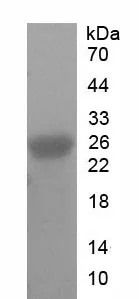 |
Greater than 97% as determined by reducing SDS-PAGE. |
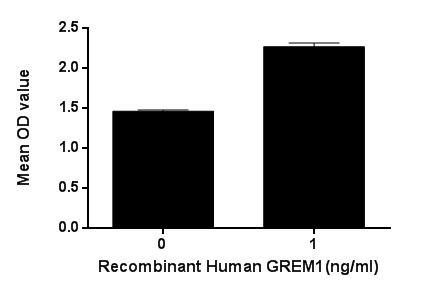 |
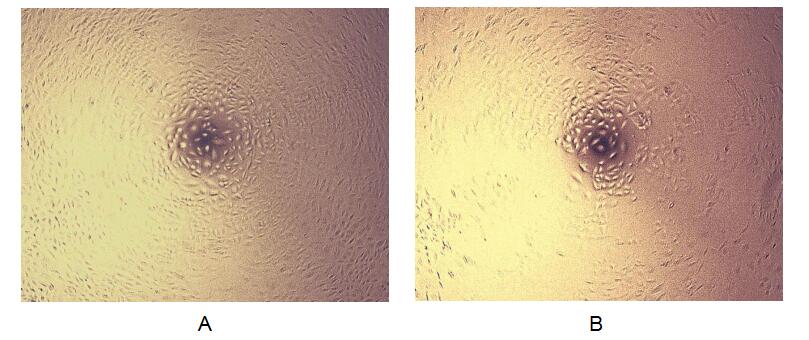
Figure. Cell proliferation of A549 cells after stimulated with GREM1. Gremlin (GREM1) is an inhibitor in the TGF beta signaling pathway. GREM1 and other BMP antagonists are important in the survival of cancer stroma survival and proliferation in some cancers. The protein expression is found in many cancers and is thought to play important roles in uterine cervix, lung, ovary, kidney, breast, colon, pancreas, and sarcoma carcinomas. A proliferation assay was conducted to detect the bioactivity of recombinant human GREM1 using A549 cells. Briefly, A549 cells were seeded into triplicate wells of 96-well plates at a density of 5,000 cells/well and allowed to attach, replaced with serum-free overnight, then the medium was replaced with 2% serum standard DMEM prior to the addition of various concentrations of GREM1. After incubated for 96h, cells were observed by inverted microscope and cell proliferation was measured by Cell Counting Kit-8 (CCK-8). Briefly, 10µL of CCK-8 solution was added to each well of the plate, then the absorbance at 450nm was measured using a microplate reader after incubating the plate for 1-4 hours at 37°C. Proliferation of A549 cells after incubation with GREM1 for 96h observed by inverted microscope was shown in Figure 1. Cell viability was assessed by CCK-8 (Cell Counting Kit-8) assay after incubation with recombinant GREM1 for 96h. The result was shown in Figure 2. It was obvious that GREM1 significantly increased cell viability of A549 cells. (A) A549 cells cultured in DMEM, stimulated with 1ng/mL GREM1 for 96h; (B) Unstimulated A549 cells cultured in DMEM for 96h. Figure. Cell proliferation of A549 cells after stimulated with GREM1. |
 |
| 分子别名Alternative Names | PIG2CKTSF1B1DAND2IHG-2DAND2DRMIncreased in high glucose protein 2Cell proliferation-inducing gene 2 proteinCysteine knot superfamily 1, BMP antagonist 1 |
|---|---|
| 背景介绍Background | Cytokine that may play an important role during carcinogenesis and metanephric kidney organogenesis, as a BMP antagonist required for early limb outgrowth and patterning in maintaining the FGF4-SHH feedback loop. Down-regulates the BMP4 signaling in a dose-dependent manner. Antagonist of BMP2; inhibits BMP2-mediated differentiation of osteoblasts (in vitro). Acts as inhibitor of monocyte chemotaxis. Can inhibit the growth or viability of normal cells but not transformed cells when is overexpressed. |
| 功能Function | Cytokine that may play an important role during carcinogenesis and metanephric kidney organogenesis, as a BMP antagonist required for early limb outgrowth and patterning in maintaining the FGF4-SHH feedback loop. Down-regulates the BMP4 signaling in a dose-dependent manner. Antagonist of BMP2; inhibits BMP2-mediated differentiation of osteoblasts (in vitro). Acts as inhibitor of monocyte chemotaxis. Can inhibit the growth or viability of normal cells but not transformed cells when is overexpressed. |
| 亚细胞定位Subcellular Location | Secreted. |
| 数据库链接Databases |
基因功能参考文献50 条
- the GREM1rs1258763 polymorphism was significantly associated with the risk of non-syndromic orofacial cleft in the Chinese population. PMID: 29149498 : 29149498
- High gremlin1 expression is associated with gastric cancer. PMID: 29396725 : 29396725
- study suggested that GREM1 delivered by MSCs promoted EMT in esophageal squamous cell carcinoma in vitro and in vivo, which is partly through TGF-beta/BMP signaling pathway. PMID: 29953975 : 29953975
- COX-2, GREM1, and HAS2 are cumulus cell genes that potentially determine oocyte and embryo developmental competence. (Review) PMID: 29537212 : 29537212
- Results indicate that Gremlin1 could be involved in gastric cancer (GC) progression and may be a good marker of long-term survival in GC. PMID: 29491067 : 29491067
- We conclude that gremlin promotes RPE cell proliferation, migration and VEGF production possibly via activating VEGFR2-Akt-mTORC2 signaling. Gremlin could be a novel therapeutic target of ROP or other retinal vasoproliferation diseases. PMID: 27894090 : 27894090
- Platelet derived Gremlin-1 might contribute to the elevated circulating levels of Gremlin-1 in acute coronary syndromes and serve as a thrombo-inflammatory mediator in cardiovascular pathophysiologies. PMID: 27929199 : 27929199
- gremlin protects skin cells from UV damages via activating VEGFR2-Nrf2 signaling PMID: 27713170 : 27713170
- Gene duplication upstream of GREM1 was screened for in all sixty-five SPS individuals with no carriers being identified. PMID: 23805267 : 23805267
- Nox1-SHH-Grem1 signaling axis in pulmonary vascular endothelium that is likely to contribute to Pulmonary hypertension. PMID: 28522681 : 28522681
- GREM1 plays an important role in the development of glioma, and it may serve as a potential target in glioma therapy. PMID: 27862197 : 27862197
- Describe a hereditary mixed polyposis syndrome in which is characterized by SCG5-GREM1 duplication. PMID: 27984123 : 27984123
- GREM1 is frequently expressed by myofibroblasts in scars or in the stroma of basal cell carcinomas, suggesting that GREM1 expression can be a marker for activated myofibroblasts in the cancer stroma or in scar tissue. PMID: 28346486 : 28346486
- Clinical features of hereditary mixed polyposis syndrome caused by GREM1 gene duplication include extracolonic tumors, onset of polyps in adolescence, and rapid progression of some polyps to advanced adenomas. PMID: 28242209 : 28242209
- In human Idiopathic Pulmonary Fibrosis patient samples the study established a strong negative correlation in the mRNA expression levels of gremlin-1 and CXCL10. The results suggest that in addition to regulation of epithelial-mesenchymal crosstalk during tissue injury, gremlin-1 modulates inflammatory cell recruitment and anti-fibrotic chemokine production in the lung. PMID: 27428020 : 27428020
- Gremlin1 protein expression in colorectal cancer associates with low tumour stage and extended survival independently of tumour stage, suggesting that it represents a relevant prognostic indicator in colorectal cancer PMID: 27257976 : 27257976
- The results suggest that inhibition of BMP-2 by Gremlin-1 occurs by a mechanism that is distinct from other known inhibitors such as Noggin and Chordin and study propose a novel model of BMP-2-Gremlin-1 interaction yet not seen among any BMP antagonists, and cannot rule out that several different oligomeric states could be found, depending on the concentration of the two proteins. PMID: 27036124 : 27036124
- Gremlin1 inhibited the cell viability and osteogenic differentiation of human mesenchymal stem cells (MSCs) and the suppression of gremlin1 expression can increase the cell viability and osteogenic differentiation of human MSCs induced by BMP-2. PMID: 28260028 : 28260028
- overexpression of GREM1 in mesenchymal stem cells have greater therapeutic effects against ischemia. PMID: 27579673 : 27579673
- Colorectal neoplasms are frequently accompanied by GERM1-expressing fibroblasts, which are closely associated with low lymphovascular invasion and a better prognosis. PMID: 28041973 : 28041973
- Diabetic patients with acute coronary syndrome show increased levels of Gremlin-1 and MIF, leading to unfavorable Gremlin-1/MIF ratios. However, DM2 alone is not associated with low Gremlin-1/MIF ratios. PMID: 27101443 : 27101443
- The critical element of the Gremlin-1 molecule for regulating MIF-induced chemotactic activity lies at the C-terminal region. A single amino acid exchange of an arginine to an alanine residue is sufficient to abolish the antagonistic effect of Gremlin-1 on MIF. The Gremlin-1 mutant R172A failed to reduce MIF-induced monocyte differentiation into macrophages. PMID: 26872252 : 26872252
- Study identified a high penetrant duplication in the regulatory region of GREM1, predisposing to colorectal cancer (CRC) in a family with attenuated/ atypical polyposis. A POLE variant was also identified in a patient with early onset CRC. PMID: 26493165 : 26493165
- Results found that high mRNA expression level of Gremlin 1 was an independent poor prognostic factor for cervical neoplasm. it is suggested that Gremlin 1 may have a role in clinical recurrence and maintaining cancer stem cell-like properties. PMID: 26530461 : 26530461
- our data suggest that the closely located GREM1 gene contributes to a rare clinical Nonsyndromic orofacial clefts entity PMID: 26968009 : 26968009
- results might suggest that variants influencing GREM1 expression levels, rather than variants affecting the function of the encoded protein, are significant factors in NSCL/P etiology. PMID: 26043427 : 26043427
- Gremlin is a key pro-fibrogenic factor in chronic pancreatitis PMID: 26141517 : 26141517
- Gremlin1 and chronic pancreatitis: a new clinical target and biomarker PMID: 26311241 : 26311241
- Data suggest that the hereditary mixed polyposis syndrome (HMPS) 40 kb duplication upstream of the gremlin 1 protein (GREM1) gene is present at low rates in Jewish Ashkenazi individuals of a familial predisposition to colorectal cancer (CRC). PMID: 25992589 : 25992589
- Gremlin-1 plasma levels of Loeys-Dietz syndrome patients were significantly elevated compared to healthy control subjects. PMID: 25116393 : 25116393
- transgenic mice overexpressing Gremlin in renal tubules develop greater glomerular and tubulointerstitial injury in response to diabetic-mediated damage PMID: 26155842 : 26155842
- Results demonstrated that miR-27b targets Gremlin 1, and that this regulation likely represents an important control point in fi brotic pathways. PMID: 24633904 : 24633904
- Gremlin/VEGFR2 axis participates in renal inflammation and could be a novel target for kidney disease. PMID: 25810250 : 25810250
- macrophage migration inhibitory factor and its inhibitor Gremlin-1 have roles in coronary artery disease PMID: 25463068 : 25463068
- These results also suggest that Gremlin1 (and possibly its mimetics that may be developed for therapeutic use) may not adversely affect normal human hematopoietic stem cell survival, though they may reduce their myelopoietic potential PMID: 25130431 : 25130431
- GREM1 induces fibrosis and angiogenesis in mouse peritoneum and is associated with increased solute transport in peritoneal dialysis patients. PMID: 25194662 : 25194662
- The single nucleotide polymorphism rs16969681 influences colorectal cancer risk through effects on Wnt-driven GREM1 expression in colorectal tumors. PMID: 25131200 : 25131200
- Gremlin1 preferentially binds to BMP-2 and BMP-4 over BMP-7. PMID: 25378054 : 25378054
- the in vivo role of gremlin in kidney pathophysiology PMID: 25036148 : 25036148
- we show that epithelial expression of GREM1 also occurs in traditional serrated adenomas, sporadic premalignant lesions with a hitherto unknown pathogenesis, and these lesions can be considered the sporadic equivalents of HMPS polyps. PMID: 25419707 : 25419707
- Gremlin could participate in renal fibrosis by inducing EMT in tubular epithelial cells through activation of Smad pathway and induction of TGF-b PMID: 24949470 : 24949470
- The results support the hypothesis that GREM1 at chromosome 15q13 is the causal gene for nonsyndromic cleft lip with or without cleft palate. PMID: 24706492 : 24706492
- our findings suggest that CRAC1 is unlikely to be implicated in the development of colorectal cancer in general or, if involved, it is through small somatic mutations or other loss of function mechanisms rather than allele loss. PMID: 12885466 : 12885466
- Study mapped a high-penetrance gene (CRAC1; also known as HMPS) associated with colorectal cancer in the Ashkenazi population to a 0.6-Mb region on chromosome 15. PMID: 18084292 : 18084292
- None of the single nucleotide polymorphisms studied in SMAD7, GREM1 or CRAC1 were associated with breast cancer risk in our study PMID: 19505925 : 19505925
- TGF-beta2, CTGF and gremlin are all involved in epithelial mesenchymal transition and extracellular matrix synthesis via activation of Smad signaling pathway in lens epithelial cells. PMID: 24755068 : 24755068
- establishes CSC-derived Gremlin1 as a driving force in maintaining glioblastoma tumor proliferation and glioblastoma hierarchies through the modulation of endogenous prodifferentiation signals PMID: 24788093 : 24788093
- Gremlin-1 correlates with degree of myocardial fibrosis and left ventricular dysfunction and is an independent predictor of adverse outcome in patients with nonischemic heart failure. PMID: 24125106 : 24125106
- Interleukin-6 (IL-6) trans signaling drives a STAT3-dependent pathway that leads to hyperactive transforming growth factor-beta (TGF-beta) signaling promoting SMAD3 activation and fibrosis via Gremlin protein. PMID: 24550394 : 24550394
- Enrichment map profiling of the cancer invasion front suggests regulation of colorectal cancer progression by the bone morphogenetic protein antagonist, gremlin-1. PMID: 23659962 : 23659962
蛋白复溶体积计算器缓冲液体积 = 蛋白质量 ÷ 蛋白浓度
输入任意两项,第三项自动计算 |
蛋白浓度稀释计算器初浓度 × 初体积 = 终浓度 × 终体积
输入任意三项,第四项自动计算 |



